Old Fucking Punk @lwriemen@librem.one
#ShlaerMellor, #FunctionPointAnalysis, #punk, #environmentalist, #unionAdvocate, #anarchosocialist #freeSoftwareAdvocate #cooperativeLife #noLLMs
"with a big old lie and a flag and a pie and a mom and a bible most folks are just liable to buy any line, any place, any time" - Frank Zappa
Joined May 2019
Old Fucking Punk
boosted


Some good news. I hope this lawsuit happens. #deletefacebook
Old Fucking Punk
boosted

Report: Apple Has Activated Software Locks on iPhone Batteries to Discourage Third-Party Repairs
https://gizmodo.com/report-apple-has-activated-software-locks-on-iphone-ba-1837053225 #librem5
If Microsoft open sourced Windows, would anyone care?
@kyle @linuxjournal Seriously, what Linux publication is a good technical journal now?
@kyle @linuxjournal Damn. First OS/2 Magazine, then Linux Journal. Where will I go next?
Old Fucking Punk
boosted

Today Linux Journal shut its doors for good. All staff were laid off and the company is left with no operating funds to continue in any capacity... https://www.linuxjournal.com/content/linux-journal-ceases-publication-awkward-goodbye
Old Fucking Punk
boosted

Chicago Teachers Are Threatening to Strike Against New Mayor Lori Lightfoot. Here’s Why.
In 2012, the Chicago Teachers Union (CTU) took to the streets with thousands of supporters in a seven-day strike that was ultimately seen as a victory against “Mayor 1%” Rahm Emanuel.
A lot has changed since then. The recent wave of teachers strikes and walkouts across the country—from West Virginia to California—has won significant gains, not only in compensation for teachers but also in student resources and overall respect for public education. Back in Chicago, Emanuel and his hand-picked corporate school board have been replaced by Mayor Lori Lightfoot, a black lesbian whose campaign platform on education largely mirrored the CTU’s agenda, and a school board comprised largely of educators and community leaders.
Old Fucking Punk
boosted

Second Circuit Rules That Section 230 Bars Civil Terrorism Claims Against Facebook
The U.S. Court of Appeals for the Second Circuit last week became the first federal appellate court to rule that Section 230 bars civil terrorism claims against a social media company. The plaintiffs, who were victims of Hamas terrorist attacks in Israel, argued that Facebook should be liable for hosting content posted by Hamas members, which allegedly inspired the attackers who ultimately harmed the plaintiffs.
EFF filed an amicus brief in the case, Force v. Facebook, arguing that both Section 230 and the First Amendment prevent lawsuits under the Anti-Terrorism Act that seek to hold online platforms liable for content posted by their users—even if some of those users are pro-terrorism or terrorists themselves. We’ve been concerned that without definitive rulings that these types of cases cannot stand under existing law, they would continue to threaten the availability of open online forums and Internet users’ ability to access information.
The Second Circuit’s decision is in contrast to that of the Ninth Circuit in Fields v. Twitter and the Sixth Circuit in Crosby v. Twitter, where both courts held only that the plaintiffs in those cases—victims of an ISIS attack in Jordan and the Pulse nightclub shooting in Florida, respectively—could not show a sufficient causal link between the social media companies and the harm suffered by the plaintiffs. Thus, the Ninth and Sixth Circuit rulings are concerning because they tacitly suggest that better pleaded complaints against social media companies for hosting pro-terrorism content might survive judicial scrutiny in the future.
The facts underlying all of these cases are tragic and we have the utmost sympathy for the plight of the victims and their families. The law appropriately allows victims to seek compensation from the perpetrators of terrorism themselves. But holding online platforms liable for what terrorists and their supporters post online—and the violence they ultimately perpetrate—would have dire repercussions: if online platforms no longer have Section 230 immunity in this context, those forums and services will take aggressive action to screen their users, review and censor content, and potentially prohibit anonymous speech. The end result would be sanitized online platforms that would not permit discussion and research about terrorism, a prominent and vexing political and social issue. As we have chronicled, existing efforts by companies to filter extremist online speech have exacted collateral damage by silencing human rights defenders.
There have been several cases filed in federal courts that seek to hold social media companies such as Twitter, Facebook, and YouTube civilly liable for providing material support to terrorists or aiding and abetting terrorists by allowing terrorist content on their platforms. We hope that the Second Circuit’s ruling will inspire other courts to ensure through their rulings that all Internet users will continue to be able to discuss and access information about controversial topics.
Old Fucking Punk
boosted

These 7 Prominent Conservatives Have Nothing in Common With White Supremacists, Nothing at All
Please don't tie Tucker Carlson, Ben Shapiro, Laura Ingraham, John Cornyn, Candace Owens, Stephen Miller, or Donald Trump to white supremacy.
The post These 7 Prominent Conservatives Have Nothing in Common With White Supremacists, Nothing at All appeared first on The Intercept.
Old Fucking Punk
boosted

At some point I'll have to ask for my money back...
Researchers discover new security flaw in all modern Intel processors:
Old Fucking Punk
boosted

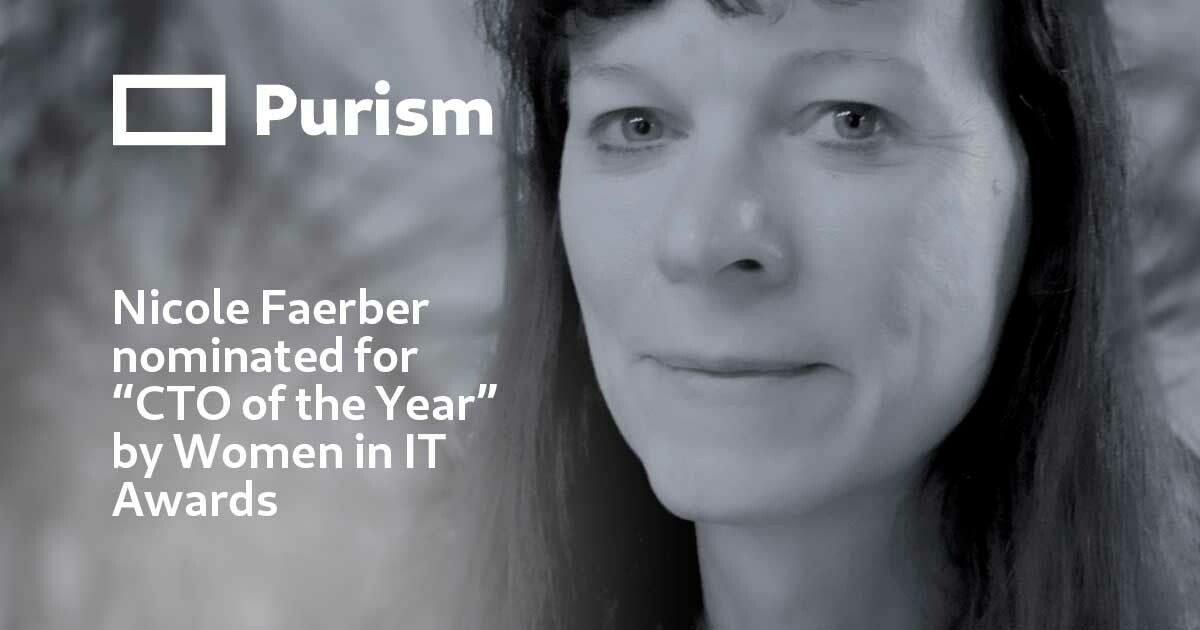
Purism CTO, Nicole Faerber, nominated for “CTO of the Year” by Women in IT Awards.
https://puri.sm/posts/nicole-faerber-nominated-for-cto-of-the-year-by-women-in-it-awards/
Old Fucking Punk
boosted
Opening the Door for Censorship: New Trademark Enforcement Mechanisms Added for Top-Level Domains
With so much dissatisfaction over how companies like Facebook and YouTube moderate user speech, you might think that the groups that run the Internet’s infrastructure would want to stay far away from the speech-policing business. Sadly, two groups that control an important piece of the Internet’s infrastructure have decided to jump right in.
The organization that governs the .org top-level domain, known as Public Interest Registry (PIR), and the Internet Corporation for Assigned Names and Numbers (ICANN) are expanding their role as speech regulators through a new agreement, negotiated behind closed doors. And they’re doing it despite the nearly unanimous opposition of nonprofit and civil society groups—the people who use .org domains. EFF is asking ICANN’s board to reconsider.
ICANN makes policies for resolving disputes over domain names, which are enforced through a web of contracts. Best-known is the Uniform Domain Name Dispute Resolution Policy (UDRP), which allows trademark holders to challenge bad-faith use of their trademarks in a domain name (specifically, cybersquatting or trademark infringement). UDRP offers a cheaper, faster alternative to domain name disputes than court. When ICANN began to add many new top-level domains beyond the traditional ones (.com, .net, .org, and a few others), major commercial brands and their trademark attorneys predicted a plague of bad-faith registrations and threatened to hold up creation of these new top-level domains, including much-needed domains in non-Latin scripts such as Chinese, Arabic, and Cyrillic.
In response, the community allowed trademark interests to create more enforcement mechanisms, but solely for these new top-level domains. One of these was Uniform Rapid Suspension (URS), a faster, cheaper version of UDRP. URS is a summary procedure designed for slam-dunk cases of cybersquatting or trademark infringement. it features shorter deadlines for responding to challenges, and its decisionmakers are paid much less than the panelists who decide UDRP cases.
In a move that has drawn lots of criticism, ICANN announced that it is requiring the use of URS in the .org domain, along with other rules that were developed specifically for the newer domains.
URS is a bad fit for .org, the third most-used domain and home to millions of nonprofit organizations (including, of course, eff.org). The .org domain has been around since 1985, long before ICANN was created. And with over ten million names already registered, there’s no reason to expect a “land rush” of people snatching up the names of popular brands and holding them for ransom.
When nonprofit organizations use brand names and other commercial trademarks, it’s often to call out corporations for their misdeeds—a classic First Amendment-protected activity. That means challenges to domain names in .org need more careful, thorough consideration than URS can provide. Adding URS to the .org domain puts nonprofit organizations who strive to hold powerful corporations and governments accountable at risk of losing their domain names, effectively removing those organizations from the Internet until they can register a new name and teach the public how to find it. Losing a domain name means losing search engine placement, breaking every inbound link to the website, and knocking email and other vital services offline.
Beyond URS, the new .org agreement gives Public Interest Registry carte blanche to “implement additional protections of the legal rights of third parties” whenever it chooses to. These aren’t necessarily limited to cases where a court has found a violation of law and orders a domain name suspended. And it could reach beyond disputes over domain names to include challenges to the content of a website, effectively making PIR a censorship bureau.
This form of content regulation has already happened in some TLDs. Donuts and Radix, which operate hundreds of top-level domains, already suspend websites’ domain names based on accusations of copyright infringement from the Motion Picture Association of America, without a court order. Some registries also take down the domain names of pharmacy-related websites based on requests from private groups affiliated with U.S. pharmaceutical companies, again without a court order or due process.
PIR, the operator of .org, has previously proposed to build its own copyright enforcement system. PIR quickly walked back that proposal after EFF spotlighted it. But PIR’s new agreement with ICANN provides a legal foundation for bringing back that proposal, or other forms of content regulation. And the existence of these contract terms could make it harder for PIR and registrars to say “No” the next time an industry group like MPAA, or a law enforcement agency from anywhere in the world, comes demanding that they act as judge, jury, and executioner of “bad” websites.
Bypassing Users’ Input
The process that led to these changes was problematic, too. The multistakeholder process, which is supposed to account for the views and needs of all groups affected by a policy change, was simply bypassed. ICANN did announce the new .org contract and provided for a period of public comment. But this seems to have been a hollow gesture.
The Non-Commercial Stakeholder Group, a group that represents many hundreds of the organizations that have .org domain names, filed a comment laying out why that domain shouldn’t have the URS system and other “rights protection mechanisms” beyond the UDRP. EFF and the Domain Name Rights Coalition also filed a comment, which was joined by top academics and activists on domain name policy.
An extraordinary and unprecedented 3,250 others filed comments opposing the new .org contract, mainly on the grounds that it removed price caps from .org registrations, potentially allowing Public Interest Registry to increase the fees it charges millions of nonprofit organizations. In contrast, only six commenters, including groups representing trademark holder interests and incumbent registries, filed supportive comments. But ICANN made no meaningful changes in response to these comments from the actual users of .org domain names. The contract they concluded on July 30th was the same as the one they proposed at the start of the public comment period. The ICANN Staff seem to think they can make any policies they choose by contract.
What Comes Next?
EFF has asked the ICANN board to reconsider their new contract, to submit the issue to the ICANN community for a decision, and to remove URS from the .org domain. Public Interest Registry has not yet created any new enforcement mechanisms, nor returned to the copyright enforcement proposal it made and shelved in 2016—but if the new contract stands, it will give them legal cover for doing so. It’s important that Internet users, especially nonprofits, make clear to ICANN, PIR, and PIR’s parent organization, the Internet Society, that nonprofits don’t need new, accelerated trademark enforcement or new forms of content regulation. After all, there’s no reason to think that these organizations will regulate the speech of Internet users any better than Facebook, YouTube, Twitter, and other prominent social networks have done. It would be best if they stay out of that role entirely.
Old Fucking Punk
boosted

The Case for Enthusiasm Over “Electability”—Or, Why We Don’t Need Another John Kerry.
A disastrous Republican administration in the White House. A varied field of Democratic candidates, ranging from a Vermont progressive who opposed the Iraq War to a more moderate frontrunner who voted to authorize it. A mobilized progressive base torn between the desire for ambitious policies and the need to win the general election.
We speak, of course, of 2004, and the Democratic campaign to unseat President George W. Bush. Writing in the magazine after Sen. John Kerry (Mass.) won the Iowa caucus and New Hampshire primary, In These Times’ David Moberg argued that “intense assaults” on the electability of former Vermont Gov. Howard Dean, then running as a progressive, helped pave the way for Kerry’s success:
[Voters'] desire to be with a winner certainly helps Kerry, especially since at least one Newsweek poll just before the New Hampshire primary showed him beating Bush by a small margin. Primary voters this year have often sounded more like professional campaign strategists than citizens picking leaders who champion their issues. In that way the Democratic primary resembles economist John Maynard Keynes’ description of stock markets. Rather than picking a company based on its intrinsic merits, Keynes argued, the successful stock-picker guesses which stock is most likely to be picked by other people. In the primary, voters are partly deciding not on the basis of which candidate they like but on whom they believe a majority of Americans will like next November.
Moberg himself was disinclined to take this sort of risk, warning that “supporting a candidate because he is ‘electable’ is a coolly calculated and ephemeral political commitment. Any passion for Kerry, for example, seems to come less for the man himself than that he represents a vehicle to defeat Bush.” This lack of passion, Moberg argued, could hinder Kerry’s chances:
Electability arguments too often are framed defensively—how a particular Democratic candidate can withstand divisive Republican appeals on religion and conservative values, military toughness, gun ownership and cutting taxes. But the best defense may be a strong offense. Candidates on the offensive have a chance of defining the debate—as Dean did on the war and … in appealing to class interests that bring together black and white voters. Democrats can also be proactive by attacking corporate abuses of power. … [Many] New Hampshire voters said they backed the candidate who most stands up for what he believes in—and Dean won their support over Kerry by more than a 2-to-1 margin. But Kerry overwhelmingly won [the] vote when it came to electability. One-fifth of voters said they backed the candidate who could best defeat George Bush—a margin Kerry won almost 6-to-1 over Dean. With electability looming so large, the odds favor victory by the candidate who best can stand up to Bush. Although Kerry was on a roll, many Democrats still did not have a clear idea of what he stands for—and his early victories do not prove he is that candidate.
Old Fucking Punk
boosted

Fedibots, astroturfing
@jameshjacksonjr "Innocence lost" always sounds better than "Ignorance lost". ;-)
Old Fucking Punk
boosted

There is no evil like reCAPTCHA at https://thestoic.me/there-is-no-evil-like-recaptcha - discuss at https://freepo.st/freepost.cgi/post/oyjgjbi3yw #freepost
Old Fucking Punk
boosted

Subhumans release “Thought Is Free” ahead of new album
Veteran UK anarcho-punks Subhumans release their first album in over ten years, Crisis Point, next month via Pirates Press Records. The first track from the album has surfaced. Have a listen to “Thought Is Free” below. The band are to embark on an East Coast tour in September.
The post Subhumans release “Thought Is Free” ahead of new album appeared first on Dying Scene.
Old Fucking Punk
boosted
Grade 2 sign to Hellcat to release LP
Isle of Wight, UK street punk trio Grade 2 have signed to Hellcat. The band are to release their third album, Graveyard Island, via the label on October 11th. The album was produced by Tim Armstrong himself. To mark the announcement, a video for the title track from the album has been released. Have a […]
The post Grade 2 sign to Hellcat to release LP appeared first on Dying Scene.
Old Fucking Punk
boosted




Scientists can now manipulate brain cells using smartphone
A team of scientists have invented a device that can control neural circuits using a tiny brain implant controlled by a smartphone. The device could speed up efforts to uncover brain diseases such as Parkinson's, Alzheimer's, addiction, depression, and pain.
Old Fucking Punk
boosted
The Bad-Apple Myth of Policing https://prismo.xyz/posts/93f7ad8e-0fd3-4a54-a614-5d8c7cc782a3
#ShlaerMellor, #FunctionPointAnalysis, #punk, #environmentalist, #unionAdvocate, #anarchosocialist #freeSoftwareAdvocate #cooperativeLife #noLLMs
"with a big old lie and a flag and a pie and a mom and a bible most folks are just liable to buy any line, any place, any time" - Frank Zappa
Joined May 2019