
Hans-Christoph Steiner @eighthave@librem.one
Joined Aug 2019
Hans-Christoph Steiner
boosted

**4/4**
I wrote *Gardens, Not Roads* last year about open source projects as communities of practice, not just codebases to maintain.
Their knowledge, relationships, and governance can't be reduced to individual fixes. Can commercial remediation strengthen those communities, or are we building parallel institutions whose priorities are set elsewhere?
https://tarakiyee.com/gardens-not-roads-cultivating-open-source-communities/
@tarakiyee as someone who has worked in many different free software communities since 1994, this is so spot on. It is a great post!
Hans-Christoph Steiner
boosted

"The United States has renewed a warning that it will not lower #tariffs on #EU steel products and a range of other goods unless #Brussels softens its enforcement of the #DigitalMarketsAct #DMA.
The European Commission relayed the message from the #Trump administration to EU capitals at a meeting last week, two people with knowledge of the matter told POLITICO.
The European Commission declined to comment."
@lehtimaeki Nice overview of how to do it! Perhaps I'm a bit biased, your points about Android are totally true, but I don't think we can just rule AOSP out. There is already quite a bit of developer activity on AOSP outside of Google. If we can all get organized around an AOSP fork, we can free it from Google. I suppose Android emulation on non-Android is one tool there but I think it'll always be clunky, so not a complete solution, but rather a migration tool.
Hans-Christoph Steiner
boosted

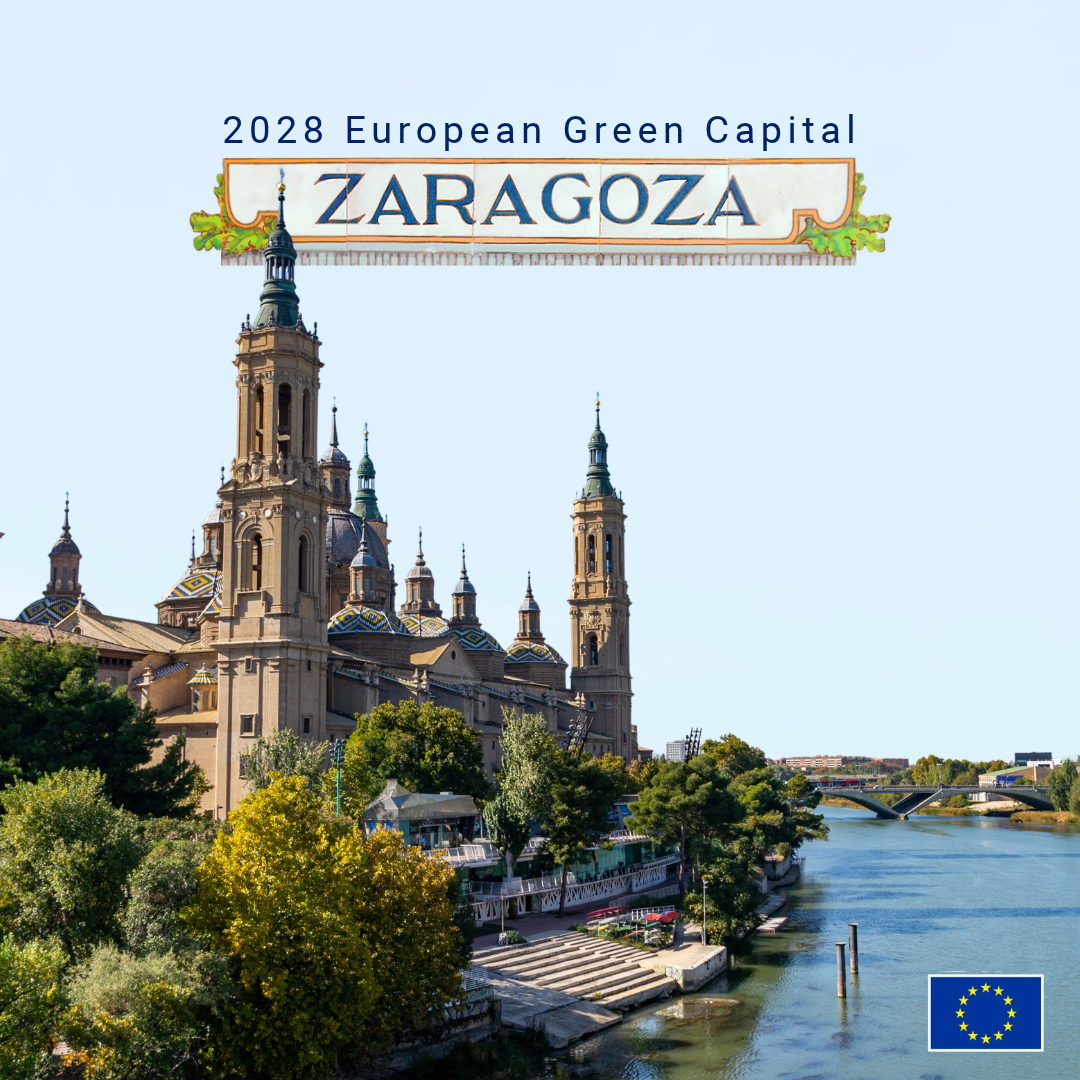
The quietest cities aren't created by chance.
They're designed that way.
Beyond its long-term sustainability commitment, Zaragoza is tackling one of Europe's most overlooked environmental challenges: noise pollution.
Instead of reacting to noise issues after they happen, the newly designated 2028 European Green Capital is building quieter neighbourhoods and green buffers right from the start.
Discover how 🌿 https://link.europa.eu/BVvBnN
Hans-Christoph Steiner
boosted

Our goal cannot be trying to replicate Silicon Valley in Europe. We must build something better!
This is my take on European Digital Sovereignty.
"Open Source Alone Won't Make Europe Digitally Sovereign" - Juhani Lehtimäki on YouTube:
https://www.youtube.com/watch?v=SDj1HWgnNTo
Hans-Christoph Steiner
boosted
RE: https://ec.social-network.europa.eu/@digitaleu/117484207178987606
EU money to support #journalism: €20 million
EU money to build #AI data centres that destroy journalism: €30 BILLION
Priorities. 🤷
Source: https://www.politico.eu/article/eu-launches-e30-billion-push-build-7-giga-ai-compute-hubs/
Has anyone found a good analysis of whether #CertificateTransparency (#CT) or #CertificationAuthorityAuthorization (#CAA) provided any kind of defense against exploits using #eMudhra? CT should but isn't implemented everywhere. I guess CAA didn't help because it is a check that is implemented at the #CertificationAuthority and someone who has the #eMudhra private keys (e.g. everyone) can generate a #MITM certificate and just not check the CAA stuff.
I started my day yesterday learning about #eMudhra, then I checked #Firefox on #Debian and found it was already patched on my machine. Thanks #carnil and #Mozilla! I just checked a fully patched #macOS machine and #Safari still shows some vulnerability. And people say Firefox is less #secure and #FOSS can't keep up. I hear #Windows is still vulnerable.
Needlessly breaking the #UX users are used to goes against the core of user-centered software design. If #FOSS wants to be an actual #alternative to #BigTech not just some techies' hobby project, this must be taken seriously. We can and should handle it well, key projects have in the past. #Google delights when competitors pull the rug out on users, that hands them an opportunity to win them back. The biggest spikes in user growth in #FDroid were when Google pulled the rug out on #Android users
#BankOfAmerica is fined $1.21 billion for "money laundering and other illicit activity". Sounds like a lot, right? Now consider they are currently spending $6 billion a quarter on stock buybacks. That's $24 billion a year. This is not even a slap on the wrist, although it is the "third largest fine in US treasury’s history". Could we start punishing #criminal banks for real please?
https://www.theguardian.com/business/2026/oct/14/bank-of-america-fined-money-laundering
@Gina as a mixed up Austro-Germanic-Slavo-American, I can only confirm the German stare is indeed a real phenomenon and also shared by Austrians and even Swiss to a lesser degree. I have sought an explanation and until now I can only scratch my head. I do feel that Germans have next level abilities on soul penetration.
In the Austrian context, I thought its about figuring out how you know a person so you know the correct greeting to use. On the metro "are they a neighbor or just look familiar?"
I strongly believe in making programming more accessible. One of the things that makes me quite sad about this boom of #AI #LLM #GenAI #code assistants is how they cement reliance on giant companies in order to achieve easier coding. Imagine if the piles of cash were instead invested in more human programming environments and better, more engaging education. We could have easily achieved the same level of #accessibility, but then, everything an individual needed would run on their own #computer
"Ich darf nicht über mein Kopftuch entscheiden".
Ich finde einen #Kopftuchverbot eine völlig absurde Idee und ist einfach #Intoleranz pur.
Hans-Christoph Steiner
boosted

Hoppa, my presentation is done at @oscl 's Decentralized and Federated track.
My talk was a bit more general, about the need to move away from centralized platforms (duh). It was at the same time as the EDIC Digital Commons talk, Murena's mobile ecosystem talk, and one about Digital Autonomy in South Tyrol, so I was amazed there was anyone at all 😅
Now I can finally relax 🥳🥳
Video will become avaliable at some point. You can find the slides here:
https://pretalx.com/media/open-source-conference-luxembourg-2026/submissions/K8ZKZQ/resources/OSCL26_Gina_Plat_The_l4G9IUT.pdf
Hans-Christoph Steiner
boosted
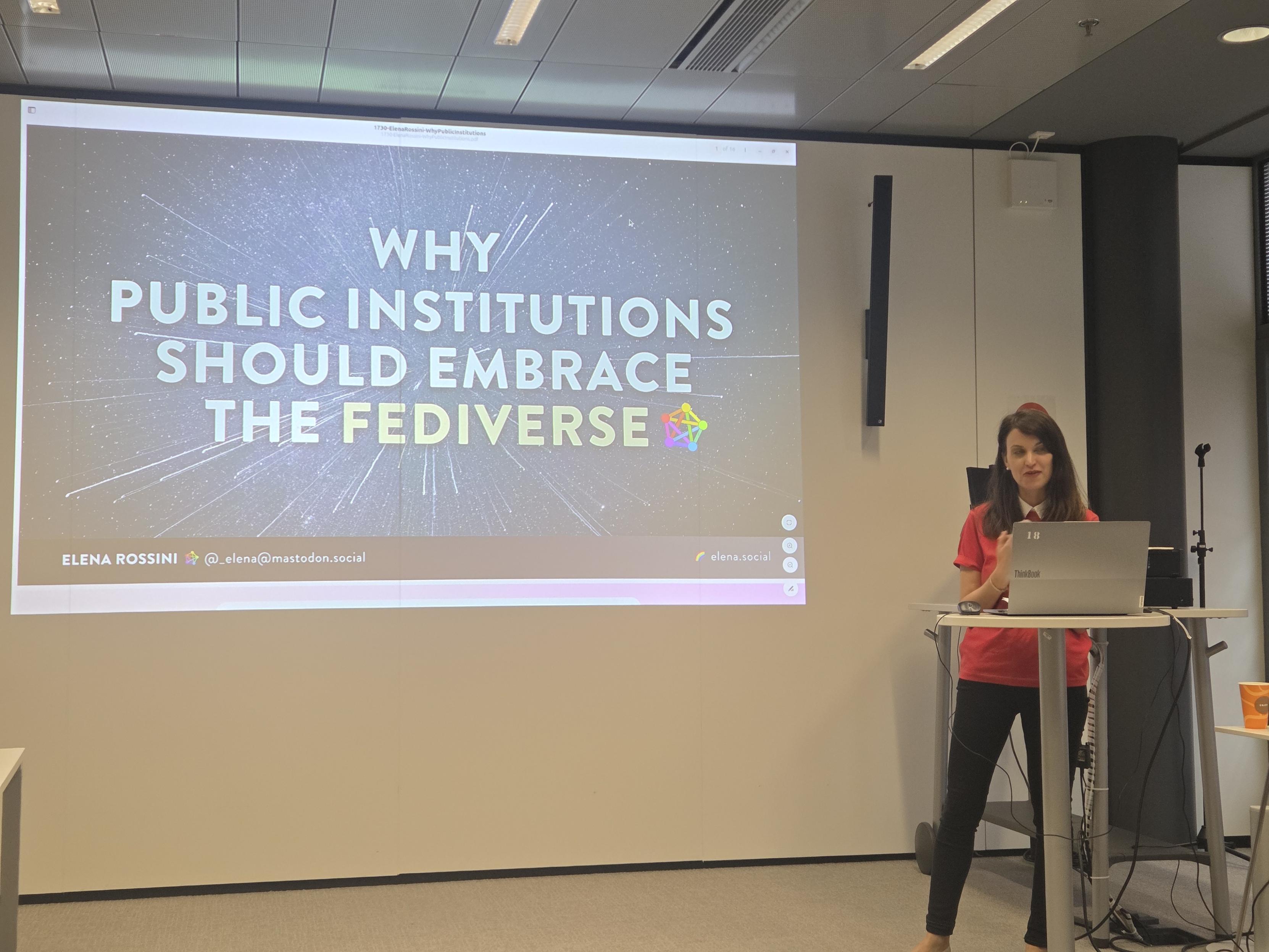
We're at the final talk of the Decentralized and Federated track at @oscl
The amazing @_elena talks about the state of social media, her Fediverse experience, and the importance of moving EU public institutions towards ethical, decentralized platforms. 🔥🔥
#OSCL26 #Oscl #digitalsovereignty #opensource #mastodon #pixelfed #fediverse #eupolicy
Hans-Christoph Steiner
boosted

DYK?
🐢 40% of marine animals caught globally is unintended bycatch, including hundreds of thousands of turtles and seabirds.
🧴An estimated 171 trillion plastic particles float on the ocean surface.
🐟 Around 90% of global fish stocks are fully- or overexploited.
🪸 Now the corporations want to start mining the seafloor. We can stop the destruction before it starts.
🦈 Humans kill ca. 11,000 sharks every hour.
@je5perl Thanks for that. So far, with other laws like EU DSA or UK Online Safety Act, there are size-based regulations. I feel like we have to repeat this whole discussion all over again. The same stuff is all relevant here. So for example, one person sets up app distribution for their family, then they'll have to do age ratings and restrictions? With the F-Droid tooling, it really is that simple.
There is this story that when times get tough, then #governments need more powers and #secrecy to provide #security. But this is not based on the facts, but fiction. Shows like Homeland or movies like Bourne portray that. Facts and real world experience tell a very different story, that overall, this approach leads to domestic abuses and escalation of foreign conflicts rather than resolution, although it can help in specific circumstances
https://www.politico.eu/article/europe-intelligence-agencies-gain-powers-russia-china-threats/
Hans-Christoph Steiner
boosted


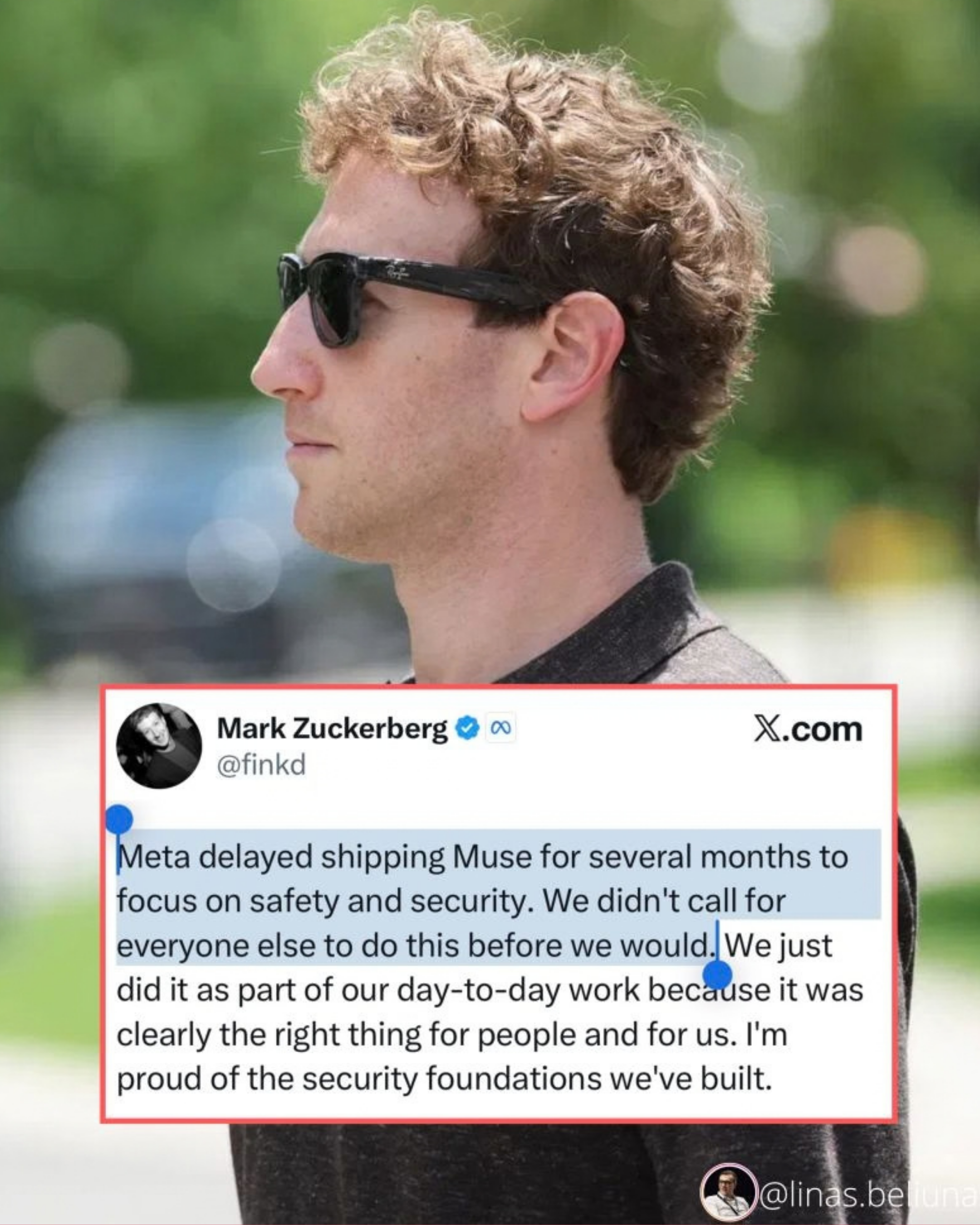
Okay Mark. 🤥
Muse might look like an amazing AI assistant - BUT - knowing that Meta makes huge profits off collecting your data & its history with unethical practices, can you actually trust the tech giant with access to every aspect of your digital life?
We certainly wouldn't!
Joined Aug 2019