Old Fucking Punk @lwriemen@librem.one
#ShlaerMellor, #FunctionPointAnalysis, #punk, #environmentalist, #unionAdvocate, #anarchosocialist
"with a big old lie and a flag and a pie and a mom and a bible most folks are just liable to buy any line, any place, any time" - Frank Zappa
Joined May 2019
Old Fucking Punk
boosted

Plants' 'organic' wounds improve produce
Scientists found benefits of insect leaf-wounding in fruit and vegetable production. Stress responses created in the fruits and vegetables initiated an increase in antioxidant compounds prior to harvest, making them healthier for human consumption.
Old Fucking Punk
boosted

Many Android phone vendors subsidize their cost w/ malware/spyware/adware just like many laptop vendors, but Android lets vendors make it impossible to remove.
In this case, free Android phones the US govt. handed out to the poor contained Chinese malware. #privacy
Old Fucking Punk
boosted

Labor 101 for Undergraduate Workers Seeking To Unionize
AMHERST, MASS.—Dolly Parton’s “9 to 5” plays in a classroom at the University of Massachusetts Amherst (UMass Amherst) as students mill about with pink “Undergraduate Workers UNITE!” buttons pinned to their shirts.
Nearly 40 students from 10 institutions across the Northeast gathered Nov. 15–17, 2019, at UMass Amherst, a highly unionized workplace, for the Northeast Undergraduate Worker Convention (NEUWC). The convention is the first in the nation aimed at training undergraduate student workers in collective organizing. UMass Amherst is home to one of the country’s only undergrad unions, known as RAPMU, which represents residential assistants (RA) and peer mentors.
The event gave students a space in which to unpack attitudes surrounding undergraduate labor, and to understand how such attitudes can lead to poor working conditions. “When I’m employed on campus, the way [my supervisor talks] about my employment is very much like, ‘This is you building your skills, it’s a good opportunity for you,’” says Ben Hayes, 23, a senior at Skidmore College. “It’s using the idea that you’re a student and therefore not a worker [who has] to be paid a fair wage and have good working conditions and be treated right.”
Led by labor organizers and educators, the workshops covered unique organizing challenges faced by undergrad workers. For starters, many students are unaware that unionizing is even possible. The largest logistical hurdle is the high turnover rate for student workers: Students graduate, study abroad, take on extracurriculars and leave campus for breaks, often interrupting organizing momentum.
As the price of higher education skyrockets, working has become a necessity for many. “I feel strongly that everyone who has this job needs it,” says Violet Daar, 19, an RA and sophomore at Wesleyan University. Emma Rose Borzekowski, 23, one of the convention organizers and a recent Wesleyan graduate who worked as an RA, says that RA positions are one of the highest paying jobs on campus.
A position as an RA is a particularly fraught one because students live in the same place they work, so it becomes more difficult to take needed breaks. Many attendees are frustrated that their work stipends don’t cover the cost of housing, despite the job requiring residing on campus. At UMass Amherst, RAPMU has bargained for higher pay and more dignified working conditions.
Elizabeth Pellerito, director of the UMass Lowell Labor Education Program, presented on the importance of inclusion. She noted that, historically, cis white men have been overrepresented in union leadership, and that there’s still a long way to go before leadership truly reflects membership. “We are a movement that’s about power, so how are we sharing the power and recognizing the privilege?” she asked.
Though the convention attendance itself was overwhelmingly white, many expressed a need to change. Conference organizer James Cordero, 21, a senior at UMass Amherst and RAPMU member, explained how RAPMU incorporated racial justice training for RAs in its bargaining contract after racist incidents on campus in 2018. “We are building a new chapter of the labor movement to improve upon past mistakes, incorporating more social justice into the movement,” Cordero says.
“The big takeaway for me is to have union organizers who are racial justice organizers, who are environmental organizers,” says Joy Ming King, 22, a Wesleyan senior.
Convention organizers stressed relationship-building as central to the success of student unions. “We wanted this [convention] to be a chance for undergraduates to meet each other [and] know they’re not alone,” Borzekowski says, which the convention facilitated. Over an afternoon break, students shared curly fries and contact information, and brainstormed strategies to bring back to their campuses.
Most convention attendees were students at private institutions, who face a pivotal moment: The National Labor Relations Board (NLRB) proposed, in September 2019, to overturn its 2016 ruling which designated student workers at private institutions as “employees”—and allowed them to unionize.
Though the young organizers worried about the NLRB’s proposal, the mood at the conference was hopeful. “We still have all of the power that selling our labor gives us and that building relationships with one another gives us,” Borzekowski says. For Lucy James-Olson, 19, a sophomore at Mount Holyoke College, “underlying all of the conversations about organizing and improving the material conditions of workers is just a conversation about love and care for each other.”
Old Fucking Punk
boosted

How to: Use #KeePassXC | #Surveillance #Self-Defense
Might be useful to some folks.
Old Fucking Punk
boosted
Old Fucking Punk
boosted
Findings on education, malnutrition 'deeply disturbing'
For the first time, researchers have mapped years of education and child malnutrition across all low- and middle-income countries at the level of individual districts. The findings include precision maps illuminating disparities within countries and regions often obscured by national-level analyses.
Old Fucking Punk
boosted

The US Oil and Gas Industry's 5-Year Plan Is a Climate and Health Nightmare
https://earther.gizmodo.com/the-us-oil-and-gas-industrys-5-year-plan-is-a-climate-a-1840876323 #climatechange #climatecrisis
Old Fucking Punk
boosted


Dodgy...
How my application ran away and called home from Redmond
https://medium.com/sensorfu/how-my-application-ran-away-and-called-home-from-redmond-de7af081100d
Old Fucking Punk
boosted
Old Fucking Punk
boosted
We Need a Strong Anti-War Movement—Yesterday
The new year opened with the United States committing an extrajudicial assassination in a foreign country by drone.
I’m not talking about the January 3, 2020 rocket attack that killed Iranian general Qasem Soleimani. I’m talking about the January 1, 2019 drone strike that killed Jamal Al Badawi, an alleged Al Qaeda plotter, in Yemen.
The U.S. carrying out assassinations from above — without trial, without warning — is nothing new. What was different about the killing of Al Badawi was that the U.S. military was public about it, announcing the killing via Twitter on January 6.
For years, activists, journalists, scholars, and others have been calling for transparency regarding the notoriously clandestine Defense Department and CIA-run drone programs. How one ends up on the lists of people targeted, to whom one appeals to get off of such a list, where the drones are based, and even when they strike are matters that were shrouded in secrecy during the Bush and Obama administrations.
That’s largely remained true under Trump — in fact, it’s even more difficult to get information about civilian casualties now. But here was an example of an assassination by drone being done in the open.
Presumably, the reason to have more information about the drone war is so the people running it can be held accountable for their actions. And yet, given the opportunity to ask questions about the New Year’s Day attack, precious few were asked by Congress or the mainstream media.
Today, as we spiral perilously toward direct military confrontation between the U.S. and Iran, it is worth reflecting on the failures to rein in Trump’s aggression along the way. Given the obvious signs that Trump has been keen to escalate the United States’ many wars — and begin new ones — the complicity of other institutions in Trump’s belligerence, particularly Congress, is stunning.
Crickets from Congress
Trump’s unilateral withdrawal from — and efforts to destroy — the nuclear deal sparked a predictable trajectory of escalating tensions between the U.S. and Iran. Many have pointed that out, most recently former National Security Adviser Susan Rice. What we need to examine more deeply are the decisions between then and now that enabled Trump to pursue such a path.
At several key junctures, lawmakers simply failed to challenge acts of U.S. aggression carried out without even a pretense of accountability, as when Amnesty International documented the fact that the U.S. killed civilians in its escalating air war in Somalia, in a report that received too little attention. Or when journalists reported that the U.S.-led siege against ISIS in the Syrian city of Raqqa was devastating for civilians of that city — whom the U.S. then abandoned, after saying it would help rebuild.
Other times, lawmakers and other officials did raise their voices in opposition to Trump’s foreign policy moves — by saying that he wasn’t committed enough to pursuing U.S. wars. Such was the response when Trump announced that he was withdrawing troops from the Turkish border with Syria. Critics advocated maintaining the open-ended military presence throughout Syria.
But we don’t even have to look back that far.
On December 9 — barely a month ago — the Washington Post began publishing a series of articles known as the Afghanistan Papers, which documented years of lies by U.S. officials and catastrophes caused by U.S. actions in its 18-year occupation of that country. Two weeks later, the New York Times released documents and video, principally testimony from U.S. Navy SEALs, that confirmed the unmistakable war crimes committed by Navy SEAL chief Eddie Gallagher, who had been recently acquitted of the most serious charges — and pardoned by the president.
Here were the major newspapers of record running front-page coverage of serious abuses people should be called to account for. Yet where were the congressional hearings?
Instead of taking steps toward that accountability, Congress did the opposite: It passed a new $738 billion military spending bill, effectively approving and fueling the wars. Despite vocal condemnation of the bill from California Democrats Ro Khanna and Barbara Lee, just 41 House Democrats voted against it, compared to 188 who joined Republicans in passing it.
Among the provisions that Khanna called attention to for being stripped away from the legislation that passed: an amendment he sponsored that denied the president authority to wage war on Iran.
Movements matter
In a national address today, Trump threatened even more sanctions against Iran. As his rhetoric becomes more belligerent — and as he deploys even more troops to the Middle East to set the stage for attacks on Iran — members of Congress’ calls to bring the president into compliance with the War Powers Act are certainly welcome. But the questions that lawmakers are raising now, after the U.S. has already committed an act of war in assassinating Soleimani in Iraq, run contrary to their actions up to this point.
Going into the new year, Congress had already sent the message that Trump and the Pentagon could do whatever they please. And whatever misgivings members of Congress have about military attacks on Iran, the body has supported the sanctions imposed on that country by the United States — which have been disastrous for the Iranian population, and which act as precursors to war.
The so-called War on Terror is completely out of control. What is needed is for the widespread opposition in the U.S. to the wars waged in our names — including attacking Iran — to be turned into a fighting resistance.
We have seen mass protest under Trump — even in its brief moments — have significant impacts. The Women’s Marches may not have ended sexual violence, but they, along with the #MeToo and #TimesUp campaigns, opened the most wide reaching and serious conversations about gender-based abuse in recent memory, and some high profile abusers have been made to account for their actions. (Even a UN convention was passed, though the U.S. hasn’t ratified it.) The spontaneous, mass mobilizations to airports against Trump’s Muslim Ban set back those plans for a time as well.
We need to extend that resistance to a U.S. military machine that’s moving like a runaway train, undeterred by the human costs of its destruction, or even the apparent lack of a strategy from a military perspective.
Popular power matters. There was, in fact, a moment where there was a conversation in Congress about ending U.S. support for Saudi Arabia’s cataclysmic war in Yemen — a war that has only been made possible with U.S. weapons, intelligence, and other forms of support. Despite votes in both houses to stop that assistance, Trump was able to veto the legislation, and the moment passed.
What if there had been mass actions in the streets? Could that effort have been pushed over the line?
We need to ask these questions, and imagine the answers. In doing so, we will be joining in solidarity with various efforts in the Middle East to challenge governments and the foreign powers — particularly the United States — backing them.
After all, the news that dominated headlines out of Iraq for the months prior to the U.S. assassination of Soleimani was that Iraqis were mobilizing en masse against a government whose origins lie in the 2003 U.S. invasion and subsequent occupation, and whose forces are armed and trained by billions of dollars in U.S. aid. (There were Iraqi protests that also targeted Iranian influence in the country.)
In fact, focusing on the movements of people throughout the Middle East, Africa, and Central Asia who find themselves in the crosshairs of the War on Terror must be essential to a movement here that challenges U.S. wars. Imagine the power, for example, of massive U.S. rallies coinciding with the movement inside Iraq to remove U.S. troops from the country. Imagine if more members of the U.S. Congress were compelled to follow Iraq’s parliament in calling for those soldiers to come home.
Behind every Bahgdadi
For the few conversations that do take place about our wars, it’s distressingly typical for the people having them forget about the people bearing the brunt of those wars.
After the October 26 killing of ISIS leader Abu Bakr Al Baghdadi, for example, Defense Department officials held a press conference at the Pentagon. You can read the transcript. Journalists in the room asked two questions about the storied dog who assisted in the killing operation, and several more about the prospect of U.S. personnel securing Syrian oil fields.
The reporters in the room didn’t ask a single question about whether others besides Al Baghdadi, including civilians, were wounded or killed in the mission.
Thankfully, other journalists did ask. NPR reporters learned that in the same raid where Baghdadi was killed, the Syrian farmer Barakat Ahmad Barakat saw his two friends killed by U.S. rockets — and his own hand severed from his body — as they were caught up in the attack while driving in van.
The three farmers were unarmed. Aside from the trauma of being maimed and seeing his friends killed, Barakat’s work is impossible without his hand. His life as he knew it ended.
Behind every “bad guy” like Baghdadi are masses of ordinary people suffering the endless grind of war — a grind that this country has made ever more brutal, with ever fewer constraints or accountability from the U.S. political system.
It is crucial that we are all talking about Iran now, as we stand on the verge of a new chapter of catastrophes — and work to prevent it. But the killing and destruction of the War on Terror is happening around the world, every day. The lack of attention to it is part of what keeps it going, and sets the stage for the current situation involving Iran, Iraq, and the United States.
The truth is, these wars are criminal, and any conversation about them that doesn’t center the people most impacted is unacceptable. That conversation won’t start in the U.S. government. Instead, it must be raised by those of us outraged by wars that have devastated generations, and who believe that people from Somalia to Afghanistan, and now to Iran — indeed, all of us — deserve a better world.
This article was produced in partnership with Foreign Policy In Focus.
Old Fucking Punk
boosted
Warren’s an Ally. We Need a Leader.
In the face of Trump and the imminent threat of fascism, and after over years 40 years of experiencing the 1% usurp our political system, progressives cannot let dogmatism and ultra-leftism lead us to confuse allies with enemies. Elizabeth Warren is an ally who has embraced many progressive reforms. The difference between her platform and that of Bernie Sanders pales in comparison to the difference between either and Joe Biden or Pete Buttigieg, the picks of the corporate Democrats. We must not allow loyalty to Warren or Sanders to pit us against one another and lose sight of our most important task—to use this moment to build a robust social movement Left.
At the same time, we need to understand the differences between the candidates. In the American political circus, it can be easy to get caught up in a candidate’s personality and see this as the driving force of change. However, far more important than individual characteristics are the political projects they are building.
One indicator is how well they inspire people to take action beyond the ballot box—because defeating both the far Right and neoliberalism will require a mass movement. In "What an Elizabeth Warren Presidency Would Look Like," Kathleen Geier fails to acknowledge that Warren has not mobilized working-class people across racial difference as effectively as Sanders. In 2017, polls showed Sanders was the most popular U.S. politician. His base is younger, more diverse and more working-class than Warren’s. He has an enormous grassroots campaign infrastructure and more donations from working people, including teachers and Walmart workers, than any other candidate. It’s important to note that Sanders’ popularity is not a product of his personality or a good slogan. It is a product of his politics.
When Sanders lost in 2016, he immediately funneled his campaign infrastructure into an independent political organization with a bold title: Our Revolution. In addition, dozens of other organizations have spun out of his campaign all across the country—a testament to the grassroots, independent nature of the Sanders political project. Elected officials at all levels of government—including Reps. Ilhan Omar and Alexandria Ocasio-Cortez—credit Sanders as inspiration for their run. This is important because transforming the make-up of Congress will be essential to moving Medicare for All, free college, decarceration and the Green New Deal forward.
Warren’s base is wealthier, whiter and more college-educated than Sanders’, and she takes a friendlier approach to the Democratic establishment. It’s hard to imagine how Warren might juggle these competing interests, but the Obama years give us a good idea what it might look like. When Obama was elected, Obama for America, the grassroots organization that fueled his campaign moved to the Democratic National Committee. As a result, his 2.5 million activists were no longer positioned to build an independent power base but instead became an arm of the Democratic Party. This took the millions of people, who had been ignited by Obama’s campaign and his independent vision for the future of American politics, off the streets and co-opted them into the confines of the neoliberal Democratic Party. This was fatal for the reforms Obama campaigned upon. In order to actually move promises like a path to citizenship for millions of immigrants, the shutdown of Guantanamo Bay, and the repeal of tax breaks on the wealthy, his inside strategy would have had to be matched with robust outside pressure. But Obama saw grassroots activism as a hindrance to his ability to build trust with moderates and Republicans. On multiple occasions, including during the Ferguson rebellion, he condemned popular resistance. As a result of his focus on compromise, Obama failed working people—by bailing out the banks instead of the people, by expanding the War on Terror and the military’s drone program and passing a watered-down version of healthcare reform.
If Warren follows in Obama’s footsteps, big ideas like Medicare for All will be dead on arrival—and there are signs that she may. The New York Times reported in August 2019 that Warren was courting party officials by stressing that she will revive the party from the inside, not mount a challenge from the outside, as has been Sanders’ approach.
As Geier notes, the bully pulpit is another tool at the president’s disposal. Geier describes how Warren went up against Wall Street and neoliberal Democrats as a freshman senator—no small feat. Warren quickly became a champion against corporate greed. But is that enough in 2020?
Today, three billionaires own more wealth than half of Americans. Given these conditions, people are demanding a total overhaul of our economic system. Polls show the majority of young people prefer socialism: 55% of women under 55 say they would prefer a socialist country to a capitalist one, and 70% of millennials—a growing slice of the electorate—say they would vote for a socialist. As the Overton window shifts, Warren remains stuck, referring to herself as a “capitalist to my bones.” She cites “corruption” as the source of every ill, implying our problems aren’t so much systemic as a matter of a few bad apples. We can anticipate that, as president, Warren will not only reinforce the false notion that capitalism can be saved, but that it can be divorced from corporate greed and that it isn’t predicated upon exploitation and the creation of a permanent underclass. While regulating corporations is necessary, we know it won’t solve the crises of climate, housing and debt. The fossil fuel industry’s very existence relies on burning carbon, the real estate industry’s relies on gouging tenants and the private banking system’s relies on massive debt. Under capitalism, the needs of people and planet are always secondary to the profit motive. Warren will offer BandAid solutions to problems that, without deep economic transformation, will only persist.
The policy plans for which Warren is famous reinforce this rhetoric. For example, while Sanders is fighting for the complete elimination of student debt, Warren’s plan targets debt up to $50,000. For people like my sister, who has accrued more than $150,000 in student loans, Warren’s plan isn’t super helpful. Yes, it would aid many students and tangibly change millions of lives—but the plan would simultaneously legitimize greedy corporations like Sallie Mae and the idea that it’s not only okay, but normal and right, to prey upon young people’s desire for a good education. Another example: On January 3, Warren broke with Sanders in announcing her support for the Trump administration's United States-Mexico-Canada Agreement (USMCA), citing the agreements improvements over its predecessor, NAFTA. However, these modest improvements do nothing to change the fundamental logic of free trade that has forced millions of people into poverty. Warren’s approach to issues such as these undermines the long-term battle to wrest our society from the grips of corporate greed, as well as the basic tenet that every human, by virtue of being born, has a fundamental right to healthcare, housing, food, water, safety and education.
While Geier mentions Warren’s poor record on foreign policy, it does not receive the level of scrutiny it deserves. It’s a shame that even our most progressive candidates for elected office are moderate when it comes to issues of foreign policy, given that the U.S. military receives more than half of all discretionary federal spending, and the U.S. is waging a War on Terror in 80 countries. Progressives cannot limit our values to the confines of U.S. borders and ignore the devastation that millions of people are experiencing around the world under U.S. militarism.
On issues of war and peace, Warren is not to the right of the Democratic party, but she is also not a progressive leader. Sanders is no saint here, either, but he has championed progressive foreign policy ideas before they were politically popular, such as ending the war in Yemen and our allyship with Saudi Arabia, cutting off funding to Israel for its occupation of Palestine and ending economic sanctions against Venezuela. Warren, meanwhile, championed Israel’s 2014 war against Gaza, has moved to the right on sanctions against Venezuela, and has been an ally to the defense industry.
Just last week, when Trump assassinated Iranian Commander Qasem Soleimani, waging war without Congressional approval, Warren began her Twitter statement against war with the qualifier "Soleimani was a murderer." In using rhetoric that jibes with Trump’s claims of “Iranian aggression," Warren may be covering her political bases, but she is also handing Trump a justification for war. This, coupled with the fact that Warren voted for the sanctions that led up to the war, makes her complicit in the deaths of thousands that may result. (Sanders, by contrast, took to nearly every platform to state clearly that the United States is the aggressor and to make steadfast his stance against war.)
Warren’s track record on foreign policy is quite clear: She moves with the political winds—when it’s popular to do the right thing, she does it, and when it’s not, she doesn’t stick her neck out. As president, will she signal to others in the party that they can continue to move to the right on foreign policy? Can we expect a continuation of the Democratic status quo under Obama, when we killed more people with drones than ever before and bombed Iraq, Syria, Pakistan, Afghanistan, Libya, Yemen and Somalia?
While both candidates are scaring billionaires, only Sanders is building a loyal base of support among working-class people. Only Sanders is moving the needle left on foreign policy. Only Sanders can be trusted to avoid the Obama trap of watering down policies in the name of bipartisanship. Only Sanders will lead a movement for the transformation of capitalism we urgently need.
This is a response to Kathleen Geier's cover story in the January 2020 issue, "What an Elizabeth Warren Presidency Would Look Like." Read it here.
The views expressed in this piece are the author's own. As a 501(c)3 nonprofit, In These Times does not oppose or endorse candidates for political office.
There needs to be an app that'll keep the work computer from screen blanking if you're just sitting at your desk looking at your phone.
Old Fucking Punk
boosted

Introducint #gtherm to get thermal zone and cooling device information easily: https://honk.sigxcpu.org/con/Introducing_gtherm.html
Old Fucking Punk
boosted

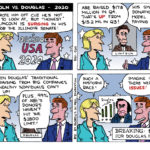
The 1858 debates between Abraham Lincoln and Stephen Douglas over the issue of slavery were notable for their erudite discussion of an important policy matter. Now we don’t talk about issues, we talk about political viability in terms of how much the candidates have to spend. Ideas? Not so much.
Old Fucking Punk
boosted

@yogthos Exactly! That’s me in my recent job interview. (No, didn’t get it.) I guess I’m just tooooo old to do the buzzword ooga booga dance around the office totem properly...
Old Fucking Punk
boosted

The @answercoalition@twitter.com is holding emergency anti-war protests Wednesday, January 8, in numerous cities in the US
There is information here for demonstrations in NYC, DC, LA, SF, and Atlanta:
https://www.answercoalition.org/emergency_demonstrations_announced_step_back_from_the_brink_no_war_with_iran?recruiter_id=341832
Old Fucking Punk
boosted

this is a reference to: https://en.wikipedia.org/wiki/Home_Taping_Is_Killing_Music and In God We Trust, Inc. by Dead Kennedys.
Old Fucking Punk
boosted
The 2020s Has To Be the Decade We Stop the Climate Crisis, But Now We Have to Stop Another War
This is the decade we have to stop climate change. But now, thanks to the belligerent Trump administration and Democrats who laid the groundwork, we also have to stop another potential war.
To stave off the worst effects of the climate crisis, the world must slash carbon emissions in half by 2030 and—at the absolute latest—bring them to net zero by 2050. In October of 2018, the UN Intergovernmental Panel on Climate Change (IPCC) said we have 12 years to keep global warming to a maximum of 1.5°C—and prevent the worst of floods, droughts, storms and resulting human deaths. “It’s a line in the sand and what it says to our species is that this is the moment and we must act now,” said Debra Roberts, co-chair of an IPCC working group. For many of us, as we rang in the New Year and charted out our hopes for the coming decade, this urgent reality was front and center.
It will be no small task to do what is needed. The IPCC says that “limiting global warming to 1.5°C would require rapid, far-reaching and unprecedented changes in all aspects of society.” Scientists estimate that 80% of global coal reserves, half of gas reserves and a third of oil reserves need to stay in the ground. The United States shares a disproportionate responsibility to curb the climate crisis, as the number-one per-capita emitter of greenhouse gases in the world, with China the highest overall emitter. But this responsibility is not evenly distributed: A study released in 2017 found that just 100 companies––and the down market consumption of their products and services––are responsible for 70% of all carbon emissions in the world, with corporations like ExxonMobil, Shell, BP and Chevron among the worst polluters. The key drivers of the crisis sit in corporate boardrooms and government offices; they are billionaires and CEOs and the U.S. politicians they buy off.
We enter into this decade facing a tremendous uphill battle under a Trump administration that has rolled back former President Obama’s meager climate protections, including the Clean Power Plan. But we also face a political climate where a resurging Left is identifying capitalism as the problem—and demanding bold programs to fight the crisis, including a Green New Deal with the teeth to shut down the fossil fuel industry and guarantee jobs under a just transition for workers. And young people around the world have shown they’re willing to walk out of school and flood the streets to demand climate action. The climate crisis is heightening contradictions in our society, and this moment could not be more pivotal.
Which is why the possibility of war with Iran could do incalculable harm. We already know the U.S. military—with more than 800 bases and commandos deployed to 75% of countries—is a climate villain. A study from Brown University released in 2019 found that the U.S. military is a bigger greenhouse gas emitter than a majority of countries, and would rank 47th if it were a nation to itself. Between 2001 and 2017 alone, the study finds, “the U.S. military emitted 1.2 billion metric tons of greenhouse gases.” In an article about their findings, the study’s authors wrote, “the U.S. military is one of the largest polluters in history, consuming more liquid fuels and emitting more climate-changing gases than most medium-sized countries.” Another war would only intensify this pollution.
But the military’s direct carbon footprint doesn’t fully capture the climate harm wrought by the prospect of war with Iran. At exactly the moment U.S. organizers need to be building support for a climate justice program that’s bigger, more powerful and more anti-capitalist than we’ve ever seen, they are instead racing to respond to a barrage of escalations: the U.S. assassination of Maj. Gen. Qassim Soleimani, who was commander of Iran’s Quds Force and a ranking official of the Iranian government, Trump’s threats to target Iranian culture sites, and to his calls to unleash “very big sanctions” on Iraq. We face a media and political climate falling into the familiar right-wing tropes, with news outlets reporting Trump administration talking points of maintaining a defensive posture at face value, and Democrats frequently endorsing the premises of Trump’s aggression, even if they hand-wring over process. The U.S. Left, just as it’s finally gaining momentum, now faces a political landscape where right-wing racist forces are emboldened.
It is difficult to quantify the role war plays in eroding political space to address environmental catastrophe, but history offers some clues. During the late 1990s and early 2000s, the global justice movement made deep connections between corporate pillaging and environmental and climate destruction. Demonstrators decried the World Trade Organization's Investor-State Dispute Settlement system, a corporate tribunal that allows companies to undercut public protections, from labor rights to climate regulations. The U.S. wing of the movement mobilized in solidarity with movements in the Global South against ecosystem destruction, the plundering of indigenous communities through oil, drilling and dam projects and much more. Activists mobilized at the UN climate talks in the Hague—blockading doorways, climbing rafters, and pieing the top U.S. negotiator—all to demand stronger action against global warming. The call to action for the 1999 WTO protests in Seattle named the threat of global warming in its first line:
Increasing poverty and cuts in social services while the rich get richer; low wages, sweatshops, meaningless jobs, and more prisons; deforestation, gridlocked cities and global warming; genetic engineering, gentrification and war: Despite the apparent diversity of these social and ecological troubles, their roots are the same—a global economic system based on the exploitation of people and the planet.
But after September 11, 2001, as the Bush administration beat the drums of war and passed a series of repressive domestic laws, much of the U.S. wing of this movement—necessarily—shifted its focus to opposing war. A protest against the World Bank and International Monetary Fund, slated for late September, 2001—and expected to be massive—was called off. Instead, the action was shifted to an anti-war march and teach-in that October, with crowds chanting, “Our Grief Is Not a Cry for War!” The New York Times’ headline on the protest summed up the jingoistic mood of the moment: “Marchers Oppose Waging War Against Terrorists.”
“I think 9/11 was the major turning point that dramatically shifted the energy and focus,” says Matt Leonard, an organizer with 350.org who came of age in the global justice movement. “Some of that was shifting into an anti-war movement, some of it was a social-political climate that became much more repressive, shifted the Overton Window of what ‘acceptable’ activism looked like, and left many people and more mainstream groups cautious about being associated with more radical social movement energy."
Rami El-Amine, a longtime anti-war activist, former editor of Left Turn, and a former organizer in the global justice movement, tells In These Times, “Clearly the movement was making lots of progress in terms of exposing the anti-environmental practices of institutions like the World Bank and International Monetary Fund. It definitely was a big part of the work and would have had a huge impact if 9/11 and war had not derailed things.”
According to El-Amine, “a lot of the non-profits pulled out when things turned anti-war.” Meanwhile, the global justice movement joined with millions of others to protest the 2003 invasion of Iraq. Clare Bayard, an organizer with the Catalyst Project and organizer in the global justice movement, tells In These Times, "A lot of the groups and infrastructure that was holding up the global justice movement, like the direct action network in places like the Bay Area, was used to build the Direct Action to Stop the War spokes council," referring to a decision making process for large numbers of people, often used to plan mass actions. "The same people and infrastructure and energies were going into anti-war activities."
Protests against the Iraq War saw record numbers of people take to the streets around the world—a vital mobilization that was certainly strengthened by the infrastructure and hard work of the global justice movement, both its U.S. and international wings. The global justice movement is not responsible for—and, in fact, was targeted by—America’s dramatic rightward, repressive lurch. And no doubt many of the people who came up in the global justice movement are still organizing today against climate change, environmental destruction, capitalism and war. But we will never know what kind of global climate movement could have been built if the invasions of Iraq and Afghanistan hadn’t demanded an immediate response from U.S. organizers—and hadn’t shifted the political climate dramatically rightward. In retrospect, the early 2000s would have been a far better time to aggressively tackle a climate crisis moving forward at warp speed—before we reached the brink.
The harms perpetrated by U.S. militarism must be measured not only by its direct violence, but by its foreclosure on other possible futures. There’s the U.S. military’s role in opening global markets to capital, paving the way for resource extraction, and the exploitation of people and the Earth—when it could have been otherwise. There’s the role U.S. militarism plays in spreading the neoliberal ideology undergirding the climate crisis—that corporations should be able to run roughshod over human well-being. And there’s the role U.S. militarism has played in enabling the repression of left movements beyond U.S. borders, from Honduras to Palestine.
"The economy that is extracting natural resources and destroying this planet is the same U.S.-led racial capitalism and imperialism that drives wars on oil-rich lands," Cindy Wiesner, the executive director of Grassroots Global Justice Alliance, tells In These Times. "U.S. militarism is one of the greatest threats to the climate crisis and life systems globally."
The upside is, as Bayard puts it, that “any energy that goes into fighting the U.S. military is going to contribute to climate justice.” And Lara Kiswani, executive director of the Arab Resource and Organizing Center, tells In These Times, “At this moment of time, there isn't a disconnect between the climate crisis and military-industrial complex. Tackling militarism is in favor of a different world order—one that advances environmental justice and climate justice.” Trying to stop a war doesn’t have to distract from fighting climate change—especially if movements are able to build from broader left momentum, and look long and hard at the challenges.
U.S.-run global capitalism and militarism is not, of course, the only responsible party for the climate crisis––but it plays a key role in driving it. We must not only tie together U.S. imperialism and climate, but use both as an entry point to combat the other. The jingoism and fervor of war has always been used by those in power to attack other elements of the Left: World War I was used as a blunt instrument against radical unionism, the red scare was used to discredit the civil rights movement, post 9/11 terror laws were used to go after environmental activists, and Trump’s frantic militarism will no doubt make combating the most urgent issue of our time––pending climate disaster––that much more difficult.
It’s no accident the same fossil fuel companies that stand to lose the most in the event of a mass movement to stop climate change—Shell, Chevron, ExxonMobil—back right-wing, pro-war politians and fundthink tankspushinggreaterU.S.militarism. They know very well the connection between U.S. empire and their own bottom line––the Left should as well. Indeed, for organizers like Wiesner, the best hope lies in doing what the polluters are already doing: connecting these dots. “People may think that we need to choose between mobilizing to stop the war or stopping climate change,” she says, “but that is a false dichotomy. We are in a fight for the livelihood of people and the planet.”
Old Fucking Punk
boosted

Media have published disturbing reports of increased scrutiny of people of Iranian descent at U.S. borders. EFF strongly opposes any digital surveillance based on religion or nationality, and reminds everyone to practice surveillance self-defense.
https://www.eff.org/deeplinks/2020/01/no-digital-surveillance-iranians-us-border-or-within-us
Old Fucking Punk
boosted


We have computed the very first chosen-prefix collision for SHA-1. To put it in another way: all attacks that are practical on MD5 are now also practical on SHA-1.
We have reduced the cost of a collision attack from 2^64.7 to 2^61.2, and the cost of a chosen-prefix collision attack from 2^67.1 to 2^63.4.
Demo: The legacy branch of GnuPG (version 1.4) is vulnerable. We have created two PGP keys with different UserIDs and colliding certificates.
#ShlaerMellor, #FunctionPointAnalysis, #punk, #environmentalist, #unionAdvocate, #anarchosocialist
"with a big old lie and a flag and a pie and a mom and a bible most folks are just liable to buy any line, any place, any time" - Frank Zappa
Joined May 2019