Old Fucking Punk @lwriemen@librem.one
#ShlaerMellor, #FunctionPointAnalysis, #punk, #environmentalist, #unionAdvocate, #anarchosocialist
"with a big old lie and a flag and a pie and a mom and a bible most folks are just liable to buy any line, any place, any time" - Frank Zappa
Joined May 2019
Old Fucking Punk
boosted

Democratic Candidates Flake on Detroit Environmental Justice Forum
Marathon Petroleum Corporation’s refinery lurches across 250 acres of Southwest Detroit like a low-rise steel city of silvery pipes and smokestacks. It looms over Kemeny Recreation Center, where neighborhood children play, getting exposed to pollution with every breath and every turn on the grass outside. The refinery, part of the Ohio-based Marathon’s oil and gas exploration and production empire, has a long history of exceeding legal limits on toxic emissions, contributing to what makes this ZIP code—48217—Michigan’s most polluted.
“We’re on the front lines of climate change right here,” says retired auto plant worker-turned-community activist Theresa Landrum, emphatically ticking off a list of industrial pollutants such as sulfur dioxide, ozone (which creates smog) and other toxic chemicals that have too often been released here in quantities that exceed the legal limits, putting the community at risk for respiratory diseases, cancer and other ailments and developmental delays in children that can be linked to pollution exposure. Landrum, a cancer survivor, said she’s seen too many friends and loved ones die of cancer and other pollution-linked causes.
Detroit’s 48217 could be the poster child for the “frontline communities” bearing the brunt environmental exposures from heavy industry—communities often invoked by this year’s Democratic presidential candidates.
So a coalition of Detroit and national environmental justice activists threw down the gauntlet in advance of the Democratic presidential debates and invited the 20 candidates to skip a few posh fundraisers and visit 48217 instead to see “the frontlines” for themselves. A team of activists even crashed an Elizabeth Warren campaign event in Detroit to urge her to come.
After weeks of pressure, Julián Castro, Jay Inslee, Beto O’Rourke and Warren said they would attend. The Bernie Sanders campaign promised to send an emissary, Harvard Professor and racial justice activist Cornel West.
But only one candidate was there at the Kemeny Recreation Center on July 31 to meet with residents and activists: Washington Gov. Jay Inslee, who has centered his entire campaign around the need address climate change.
O’Rourke, Castro and West had pulled out at the last minute. Warren had waffled and eventually canceled.
The fact that only one candidate showed up is “quite frankly unacceptable and unstrategic,” says Anthony Rogers-Wright, policy coordinator with Climate Justice Alliance, a national umbrella group of climate and environmental justice organizations around the country. Climate Justice Alliance helped push candidates to attend, as did Rep. Rashida Tlaib (D-Mich.) and the Sunrise Movement (which also joined the local organizations that spearheaded the Frontline Detroit pre-debate rally and march on July 30.)
Inslee not only attended the meeting on July 31, he visited the neighborhood three times, unveiling his Community Climate Justice Plan in a July 29 press conference outside the Kemeny Recreation Center, with the Marathon refinery as the backdrop. He also took a tour of the 48217 ZIP code. Once the area was home to even more industry, before the auto industry’s decline prompted many companies to pull out, leaving polluted land behind.
Life in 48217
More than 8,000 people live in the 48217 ZIP code, predominantly working-class people of color living amid industrial properties in government-financed housing and single-family Craftsman bungalows. Many have nicely tended gardens out front and children’s bikes lying on the lawns. This ZIP code and other highly polluted ones nearby were settled decades ago by African Americans who moved into this isolated area on Detroit’s southwestern limits from the Jim Crow South.
Growing up here, Theresa Landrum watched as a family gas station expand into the mammoth Marathon refinery that processes 140,000 barrels of crude oil into gasoline and other products each day. Environmental justice activists have sounded the alarm for years. Nevertheless, Marathon has continued to grow with the blessing of state and local officials, while activist demands go unattended.
Marathon, which staunchly defends its operating record and says its refinery contributes just 3% to area emissions, is one of 26 industrial operations residents live with every day, according to a report by the the 48217 Monitoring Group. Within 48217 and its neighboring ZIP codes sit steel mills, a salt mine, a Marathon tank farm and DTE Energy Co’s coal-fired plant, complete with the kind of coal ash storage ponds that have burst their banks and contaminated water supplies with arsenic, mercury, selenium and other compounds in North Carolina and other states. The 48217 ZIP code is home to more than half of those operations, with the rest dotting both sides of Detroit’s Southwest city limits.
Heavy trucks traverse neighborhood streets night and day, carrying away the tar sands oil from the Marathon refinery, slag from steel mills, and industrial waste from the myriad other polluting operations. An industrial stench permeates the air, a testament to the pollution people breathe in night and day. In addition to residents’ reports of high cancer rates, a Michigan state report asthma rates are off the charts in Detroit, compared to the rest of Michigan; a fact Landrum and her neighbors know all too well through firsthand experience.
“This community mirrors communities across the nation,” Landrum says. “Black and brown people are being exposed to an enormous amount of chemicals.”
Walking the talk
The 2020 race has seen unprecedented talk by would-be presidents about climate justice and making a “just transition” off of fossil fuels that will protect workers and vulnerable communities of color. But the lack of follow through sends the opposite message, says Rogers-Wright of the Climate Justice Alliance.
“It continues the trope that maybe black and brown communities’ health is not as important [to the candidates] as their votes, he says. “We’ve seen some of these candidates easily go into coal country in West Virginia and majority white states and counties” so, he asks: Why couldn’t they take 30 minutes out of their schedules to meet with those on Detroit’s frontlines?
“The optics alone [of last week’s no-shows] don’t look very good at a time when we are coming to grips with the fact that we have an epidemic of white supremacy and nationalism in our country,” said Rogers-Wright, who says ignoring frontline communities feeds into a familiar narrative that poor and vulnerable communities are not a priority.
Nevertheless, environmental justice campaigners say it’s exciting to see many of the candidates competing for the mantel of environmental justice champion this election cycle. The mere fact that so many candidates are not only talking about climate change but climate justice this election cycle is unprecedented.
Nick Leonard, executive director of the Great Lakes Environmental Law Center in Detroit, says he is grateful that the choice to hold debates in Detroit called attention to the environmental justice issues facing the city. But he cautions that a just transition “can mean a lot of things,” including who will get the jobs created to build a new renewable energy economy. While frontline communities are disproportionately burdened with the industrial operations and pollution, they seldom get the jobs created in their communities by those same industries. Whether that will change under a new president remains to be seen, he says.
Old Fucking Punk
boosted
Reclaiming “Send Her Back”: A Call for Black Americans to Voyage to Africa
When it comes to being Black, queer and immigrant in America, there is no safety. The countless violent attacks on people of color, the lack of action against guns after repeated mass shootings and the unrelenting excuses for assailants who are predominantly white and male point to a sinister truth about America: Violence and murder founded this nation and remain deeply entrenched in the state ideology. The president has reinforced this ideology by inciting anti-Black and anti-immigrant sentiment through the call for ICE raids and a border wall and shouts for American-born, non-white government officials to go back to their countries.
While the president’s comment was undoubtedly meant as an insulting erasure of the foundational legacy and heritage of Indigenous, Black and Latinx people in America, the recent mass shootings have convinced me that some of us should return to our origin country—but not for the reason Trump suggests. As a Black American, I had no idea what traveling to the motherland would mean for my life. Now that I’ve gone, it is my sincerest belief that we as people of the diaspora in America owe it to ourselves to travel to Africa, to touch the land where our people were ripped from the shore, to experience what it’s like to live in a place where Blackness is celebrated, without fear and racism.
When I became a mother in America, my sense of fear was heightened because I was now living from the lens of a Black woman with a sensitive and wildly curious Black son. I remember watching the case of Trayvon Martin closely; my son Akeim was only 10 months old the day George Zimmerman was acquitted for Trayvon’s death, and it broke me down into a haze of heartache and rage. At the time, I was in the first months of building BYP100, a political organization for young Black people dedicated to fighting for the liberation of all Black people, with several of my comrades including Charlene Carruthers, Rose Afriyie, Malcolm London and Jasson Perez. Even while grieving, we knew that centering ourselves in joy was the medicine for the evil that trailed us throughout our American experience. We decided our first event would be a celebration of life for Trayvon at our headquarters on the south side of Chicago. Such events were the balm for the moments of anguish brought on with each shooting of an unarmed Black woman, child, trans person and man. We understood our joy was a major tool in resisting despair and continuing the fight to live freely.
Out of this understanding, BYP100 member Jonathan Lykes founded the Black Joy Experience Ensemble, a cultural production and performance group utilizing old tools of movement, such as chants and songs, to politicize and honor our spirit as resilient and creative people of the sun. As members of the Ensemble, Jonathan and I were invited to join an international delegation to Ghana where we would attend their annual Pan-African festival PANAFEST during the historic Year of Return, a decree made by the Ghanian government to commemorate the 400 years since the first documented African was brought to Jamestown, Va. as a slave. I spent two weeks building relationships with youth, elders, government officials, activists and artists, sharing collective stories about our experience as Black people and what it means to have Black joy across the diaspora.
The welcoming I felt in Ghana was like nothing I’d ever experienced in my twenty-something years as a Black American. For two nights I was hosted in Lomé, Togo, by a dear friend Dossé-Via Trenou-Wells, founder of Magic and Melanin, and one night we had an intergenerational and multilingual conversation with Black people from America, Togo, Ghana, Senegal, France and London, on how we experience joy to combat oppression. We talked about the importance of being in a warm climate, the presence of music in the streets, the pleasure of a stranger smiling and saying hello to you and the familiar energy we immediately felt upon meeting each other. In thinking about how to strengthen our bond as people of the diaspora, there were some critical realizations around our forced separation. I was amazed that many of my continental African kin were not made aware of the enslavement of African Americans. And likewise, I hold a surface-level knowledge of the colonization of the different African nations. As we talked and ate and translated across Ewe, French, Mina and English, our bond as a group grew closer. One brother from Togo said it was his first time being a room where a group was talking about Blackness and it made him feel thirsty for more. I believe this kind of happening was able to take place because we had the luxury of being together unhindered by violence and overt racism by white people.
Days before I returned home from Ghana, a sister of mine back in Chicago sent me a report of two mothers from the anti-violence group MASK killed in a drive-by shooting while monitoring their community. The news jolted me out my serene time in Ghana and drew me back home to Chicago and my concern for my son and daughter. As I called my children’s fathers, all I could think about was getting me and my babies somewhere, anywhere safe to live. On the last day of the trip, my fellow comrade announced to our group that there had been a mass shooting in El Paso, Texas, with 22 people murdered and 26 others injured, some of whom wouldn’t go to the hospital out of fear because they are undocumented. Before I could process El Paso, we got word of yet another mass shooting with nine more murdered and 27 injured in Dayton, Ohio, not far from my hometown of Cleveland, where 12-year-old Tamir Rice was murdered in 2014.
The news of these recent shootings provoked a deep anxiety in me, mainly because I was not surprised at all to hear it. I am still reeling from the deaths of the The Charleston 9 and those killed and harmed at Pulse nightclub. But it’s deeply unsettling to realize that in the past 10 years I have grown wary but accustomed to the targeted murder of people of color and Black people by police and vigilantes with white supremacist agendas.
I was not eager to return to America. In Ghana, I noticed a striking difference as I was walking around Osu or Cape Coast: Everywhere I went, I had no fear of being harassed or suffering from the demoralizing effects of constant microaggressions, because I was a part of the majority. The concept of “Black love” or “Black hair” or Black anything holds no resonance with locals because it would be redundant. My Blackness was at ease on the continent. I felt safe in a way I didn’t know existed, and now I know this is how I am supposed to feel all the time.
After hearing about the shootings, I went to social media to see the same discourse I knew too well: We should send thoughts and prayers, the shooters are mentally unstable and were apprehended without incident. I saw another post about a Black man who was pistol whipped around the same time without any mainstream media attention. When the singer Ari Lennox went live on Instagram to express her anxiety around living in America, the fear of being in a movie theater or taking her nephew to daycare, it hit me again how blessed I’d been to shed this fear for my personal safety for a couple of weeks. I was struck by how Ari Lennox or my friend Jonathan or myself are otherwise full of joy and life but are constantly disrupted by the hatred of white supremacy.
In returning to the motherland I found so much opportunity to settle into a place of Black joy, and I’m encouraged by how rapidly this joy has been spreading into Black America as well. When Black Panther came out I remember all the viral videos of Black Americans adorned in kente and dashikis dancing as they left the theaters. I felt the same energy with the release of the live-action The Lion King and Beyoncé’s love letter to Africa with her production of the movie's soundtrack, The Gift. The celebrated performances of Burna Boy and Mr. Eazi at Coachella, Tobe Nwigwe, a first generation Nigerian-American repping Houston, are all examples of a widely increasing afro-fusion.
On both sides of the Atlantic, we are realizing we’re more familiar than we may have thought. And this cross-cultural exchange is not only possible but critical to our continued resistance to a global attack on Blackness.
I am not romanticizing a neat transition into a Pan-African world; it is extremely difficult for our continental relatives to get to the states and the cost of travel even for Black Americans with blue passport books can be prohibitive. However, with social media to connect us and a will to learn, we can begin to heal our distance from our kin. And there are organizations being created for the sole purpose of granting scholarships for people of the diaspora to return home. I invite all my Black people to learn about W.E.B. Du Bois’ sojourn to Ghana and his relationship to Ghana’s first prime minister, the great Kwame Nkrumah, and how Du Bois’ renounced his American citizenship to remain in Ghana. To take the time to learn some Twi and most importantly get in right relationship with the land we were stolen from and begin a process of healing our lost kinship.
So yes, we should all go back. Not because white supremacists don’t want us here but because of our own self-love and self-determination. We need to debunk the myth that our places of origin are third-world shitholes and reclaim our legacy as the richest, most generative and creative beings on this earth. We come from the bastion of the world’s natural resources and our collective melanin is just the vibranium we need to heal ourselves and continue the fight for Black people all over the world.
I should have stayed in bed today. I'm cutting everything twice and measuring once.
Old Fucking Punk
boosted


Some good news. I hope this lawsuit happens. #deletefacebook
Old Fucking Punk
boosted

Report: Apple Has Activated Software Locks on iPhone Batteries to Discourage Third-Party Repairs
https://gizmodo.com/report-apple-has-activated-software-locks-on-iphone-ba-1837053225 #librem5
If Microsoft open sourced Windows, would anyone care?
Old Fucking Punk
boosted

Today Linux Journal shut its doors for good. All staff were laid off and the company is left with no operating funds to continue in any capacity... https://www.linuxjournal.com/content/linux-journal-ceases-publication-awkward-goodbye
Old Fucking Punk
boosted

Chicago Teachers Are Threatening to Strike Against New Mayor Lori Lightfoot. Here’s Why.
In 2012, the Chicago Teachers Union (CTU) took to the streets with thousands of supporters in a seven-day strike that was ultimately seen as a victory against “Mayor 1%” Rahm Emanuel.
A lot has changed since then. The recent wave of teachers strikes and walkouts across the country—from West Virginia to California—has won significant gains, not only in compensation for teachers but also in student resources and overall respect for public education. Back in Chicago, Emanuel and his hand-picked corporate school board have been replaced by Mayor Lori Lightfoot, a black lesbian whose campaign platform on education largely mirrored the CTU’s agenda, and a school board comprised largely of educators and community leaders.
Old Fucking Punk
boosted

Second Circuit Rules That Section 230 Bars Civil Terrorism Claims Against Facebook
The U.S. Court of Appeals for the Second Circuit last week became the first federal appellate court to rule that Section 230 bars civil terrorism claims against a social media company. The plaintiffs, who were victims of Hamas terrorist attacks in Israel, argued that Facebook should be liable for hosting content posted by Hamas members, which allegedly inspired the attackers who ultimately harmed the plaintiffs.
EFF filed an amicus brief in the case, Force v. Facebook, arguing that both Section 230 and the First Amendment prevent lawsuits under the Anti-Terrorism Act that seek to hold online platforms liable for content posted by their users—even if some of those users are pro-terrorism or terrorists themselves. We’ve been concerned that without definitive rulings that these types of cases cannot stand under existing law, they would continue to threaten the availability of open online forums and Internet users’ ability to access information.
The Second Circuit’s decision is in contrast to that of the Ninth Circuit in Fields v. Twitter and the Sixth Circuit in Crosby v. Twitter, where both courts held only that the plaintiffs in those cases—victims of an ISIS attack in Jordan and the Pulse nightclub shooting in Florida, respectively—could not show a sufficient causal link between the social media companies and the harm suffered by the plaintiffs. Thus, the Ninth and Sixth Circuit rulings are concerning because they tacitly suggest that better pleaded complaints against social media companies for hosting pro-terrorism content might survive judicial scrutiny in the future.
The facts underlying all of these cases are tragic and we have the utmost sympathy for the plight of the victims and their families. The law appropriately allows victims to seek compensation from the perpetrators of terrorism themselves. But holding online platforms liable for what terrorists and their supporters post online—and the violence they ultimately perpetrate—would have dire repercussions: if online platforms no longer have Section 230 immunity in this context, those forums and services will take aggressive action to screen their users, review and censor content, and potentially prohibit anonymous speech. The end result would be sanitized online platforms that would not permit discussion and research about terrorism, a prominent and vexing political and social issue. As we have chronicled, existing efforts by companies to filter extremist online speech have exacted collateral damage by silencing human rights defenders.
There have been several cases filed in federal courts that seek to hold social media companies such as Twitter, Facebook, and YouTube civilly liable for providing material support to terrorists or aiding and abetting terrorists by allowing terrorist content on their platforms. We hope that the Second Circuit’s ruling will inspire other courts to ensure through their rulings that all Internet users will continue to be able to discuss and access information about controversial topics.
Old Fucking Punk
boosted

These 7 Prominent Conservatives Have Nothing in Common With White Supremacists, Nothing at All
Please don't tie Tucker Carlson, Ben Shapiro, Laura Ingraham, John Cornyn, Candace Owens, Stephen Miller, or Donald Trump to white supremacy.
The post These 7 Prominent Conservatives Have Nothing in Common With White Supremacists, Nothing at All appeared first on The Intercept.
Old Fucking Punk
boosted

At some point I'll have to ask for my money back...
Researchers discover new security flaw in all modern Intel processors:
Old Fucking Punk
boosted

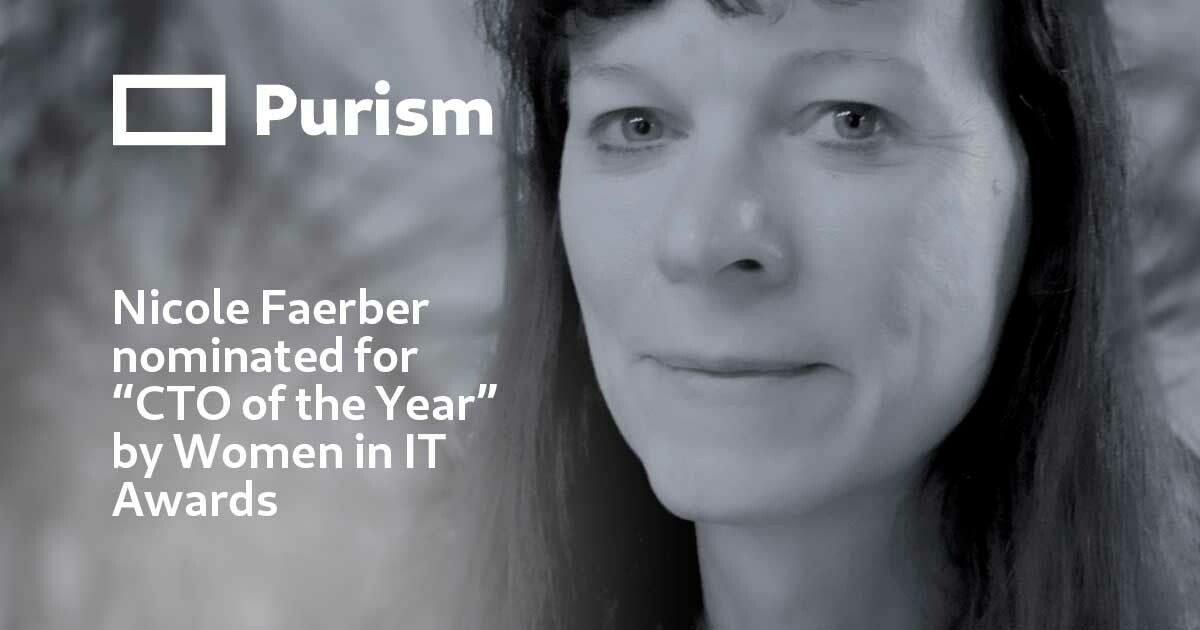
Purism CTO, Nicole Faerber, nominated for “CTO of the Year” by Women in IT Awards.
https://puri.sm/posts/nicole-faerber-nominated-for-cto-of-the-year-by-women-in-it-awards/
Old Fucking Punk
boosted
Opening the Door for Censorship: New Trademark Enforcement Mechanisms Added for Top-Level Domains
With so much dissatisfaction over how companies like Facebook and YouTube moderate user speech, you might think that the groups that run the Internet’s infrastructure would want to stay far away from the speech-policing business. Sadly, two groups that control an important piece of the Internet’s infrastructure have decided to jump right in.
The organization that governs the .org top-level domain, known as Public Interest Registry (PIR), and the Internet Corporation for Assigned Names and Numbers (ICANN) are expanding their role as speech regulators through a new agreement, negotiated behind closed doors. And they’re doing it despite the nearly unanimous opposition of nonprofit and civil society groups—the people who use .org domains. EFF is asking ICANN’s board to reconsider.
ICANN makes policies for resolving disputes over domain names, which are enforced through a web of contracts. Best-known is the Uniform Domain Name Dispute Resolution Policy (UDRP), which allows trademark holders to challenge bad-faith use of their trademarks in a domain name (specifically, cybersquatting or trademark infringement). UDRP offers a cheaper, faster alternative to domain name disputes than court. When ICANN began to add many new top-level domains beyond the traditional ones (.com, .net, .org, and a few others), major commercial brands and their trademark attorneys predicted a plague of bad-faith registrations and threatened to hold up creation of these new top-level domains, including much-needed domains in non-Latin scripts such as Chinese, Arabic, and Cyrillic.
In response, the community allowed trademark interests to create more enforcement mechanisms, but solely for these new top-level domains. One of these was Uniform Rapid Suspension (URS), a faster, cheaper version of UDRP. URS is a summary procedure designed for slam-dunk cases of cybersquatting or trademark infringement. it features shorter deadlines for responding to challenges, and its decisionmakers are paid much less than the panelists who decide UDRP cases.
In a move that has drawn lots of criticism, ICANN announced that it is requiring the use of URS in the .org domain, along with other rules that were developed specifically for the newer domains.
URS is a bad fit for .org, the third most-used domain and home to millions of nonprofit organizations (including, of course, eff.org). The .org domain has been around since 1985, long before ICANN was created. And with over ten million names already registered, there’s no reason to expect a “land rush” of people snatching up the names of popular brands and holding them for ransom.
When nonprofit organizations use brand names and other commercial trademarks, it’s often to call out corporations for their misdeeds—a classic First Amendment-protected activity. That means challenges to domain names in .org need more careful, thorough consideration than URS can provide. Adding URS to the .org domain puts nonprofit organizations who strive to hold powerful corporations and governments accountable at risk of losing their domain names, effectively removing those organizations from the Internet until they can register a new name and teach the public how to find it. Losing a domain name means losing search engine placement, breaking every inbound link to the website, and knocking email and other vital services offline.
Beyond URS, the new .org agreement gives Public Interest Registry carte blanche to “implement additional protections of the legal rights of third parties” whenever it chooses to. These aren’t necessarily limited to cases where a court has found a violation of law and orders a domain name suspended. And it could reach beyond disputes over domain names to include challenges to the content of a website, effectively making PIR a censorship bureau.
This form of content regulation has already happened in some TLDs. Donuts and Radix, which operate hundreds of top-level domains, already suspend websites’ domain names based on accusations of copyright infringement from the Motion Picture Association of America, without a court order. Some registries also take down the domain names of pharmacy-related websites based on requests from private groups affiliated with U.S. pharmaceutical companies, again without a court order or due process.
PIR, the operator of .org, has previously proposed to build its own copyright enforcement system. PIR quickly walked back that proposal after EFF spotlighted it. But PIR’s new agreement with ICANN provides a legal foundation for bringing back that proposal, or other forms of content regulation. And the existence of these contract terms could make it harder for PIR and registrars to say “No” the next time an industry group like MPAA, or a law enforcement agency from anywhere in the world, comes demanding that they act as judge, jury, and executioner of “bad” websites.
Bypassing Users’ Input
The process that led to these changes was problematic, too. The multistakeholder process, which is supposed to account for the views and needs of all groups affected by a policy change, was simply bypassed. ICANN did announce the new .org contract and provided for a period of public comment. But this seems to have been a hollow gesture.
The Non-Commercial Stakeholder Group, a group that represents many hundreds of the organizations that have .org domain names, filed a comment laying out why that domain shouldn’t have the URS system and other “rights protection mechanisms” beyond the UDRP. EFF and the Domain Name Rights Coalition also filed a comment, which was joined by top academics and activists on domain name policy.
An extraordinary and unprecedented 3,250 others filed comments opposing the new .org contract, mainly on the grounds that it removed price caps from .org registrations, potentially allowing Public Interest Registry to increase the fees it charges millions of nonprofit organizations. In contrast, only six commenters, including groups representing trademark holder interests and incumbent registries, filed supportive comments. But ICANN made no meaningful changes in response to these comments from the actual users of .org domain names. The contract they concluded on July 30th was the same as the one they proposed at the start of the public comment period. The ICANN Staff seem to think they can make any policies they choose by contract.
What Comes Next?
EFF has asked the ICANN board to reconsider their new contract, to submit the issue to the ICANN community for a decision, and to remove URS from the .org domain. Public Interest Registry has not yet created any new enforcement mechanisms, nor returned to the copyright enforcement proposal it made and shelved in 2016—but if the new contract stands, it will give them legal cover for doing so. It’s important that Internet users, especially nonprofits, make clear to ICANN, PIR, and PIR’s parent organization, the Internet Society, that nonprofits don’t need new, accelerated trademark enforcement or new forms of content regulation. After all, there’s no reason to think that these organizations will regulate the speech of Internet users any better than Facebook, YouTube, Twitter, and other prominent social networks have done. It would be best if they stay out of that role entirely.
Old Fucking Punk
boosted
The Case for Enthusiasm Over “Electability”—Or, Why We Don’t Need Another John Kerry.
A disastrous Republican administration in the White House. A varied field of Democratic candidates, ranging from a Vermont progressive who opposed the Iraq War to a more moderate frontrunner who voted to authorize it. A mobilized progressive base torn between the desire for ambitious policies and the need to win the general election.
We speak, of course, of 2004, and the Democratic campaign to unseat President George W. Bush. Writing in the magazine after Sen. John Kerry (Mass.) won the Iowa caucus and New Hampshire primary, In These Times’ David Moberg argued that “intense assaults” on the electability of former Vermont Gov. Howard Dean, then running as a progressive, helped pave the way for Kerry’s success:
[Voters'] desire to be with a winner certainly helps Kerry, especially since at least one Newsweek poll just before the New Hampshire primary showed him beating Bush by a small margin. Primary voters this year have often sounded more like professional campaign strategists than citizens picking leaders who champion their issues. In that way the Democratic primary resembles economist John Maynard Keynes’ description of stock markets. Rather than picking a company based on its intrinsic merits, Keynes argued, the successful stock-picker guesses which stock is most likely to be picked by other people. In the primary, voters are partly deciding not on the basis of which candidate they like but on whom they believe a majority of Americans will like next November.
Moberg himself was disinclined to take this sort of risk, warning that “supporting a candidate because he is ‘electable’ is a coolly calculated and ephemeral political commitment. Any passion for Kerry, for example, seems to come less for the man himself than that he represents a vehicle to defeat Bush.” This lack of passion, Moberg argued, could hinder Kerry’s chances:
Electability arguments too often are framed defensively—how a particular Democratic candidate can withstand divisive Republican appeals on religion and conservative values, military toughness, gun ownership and cutting taxes. But the best defense may be a strong offense. Candidates on the offensive have a chance of defining the debate—as Dean did on the war and … in appealing to class interests that bring together black and white voters. Democrats can also be proactive by attacking corporate abuses of power. … [Many] New Hampshire voters said they backed the candidate who most stands up for what he believes in—and Dean won their support over Kerry by more than a 2-to-1 margin. But Kerry overwhelmingly won [the] vote when it came to electability. One-fifth of voters said they backed the candidate who could best defeat George Bush—a margin Kerry won almost 6-to-1 over Dean. With electability looming so large, the odds favor victory by the candidate who best can stand up to Bush. Although Kerry was on a roll, many Democrats still did not have a clear idea of what he stands for—and his early victories do not prove he is that candidate.
Old Fucking Punk
boosted
Fedibots, astroturfing
Old Fucking Punk
boosted

There is no evil like reCAPTCHA at https://thestoic.me/there-is-no-evil-like-recaptcha - discuss at https://freepo.st/freepost.cgi/post/oyjgjbi3yw #freepost
Old Fucking Punk
boosted

Subhumans release “Thought Is Free” ahead of new album
Veteran UK anarcho-punks Subhumans release their first album in over ten years, Crisis Point, next month via Pirates Press Records. The first track from the album has surfaced. Have a listen to “Thought Is Free” below. The band are to embark on an East Coast tour in September.
The post Subhumans release “Thought Is Free” ahead of new album appeared first on Dying Scene.
Old Fucking Punk
boosted
Grade 2 sign to Hellcat to release LP
Isle of Wight, UK street punk trio Grade 2 have signed to Hellcat. The band are to release their third album, Graveyard Island, via the label on October 11th. The album was produced by Tim Armstrong himself. To mark the announcement, a video for the title track from the album has been released. Have a […]
The post Grade 2 sign to Hellcat to release LP appeared first on Dying Scene.
Old Fucking Punk
boosted




Scientists can now manipulate brain cells using smartphone
A team of scientists have invented a device that can control neural circuits using a tiny brain implant controlled by a smartphone. The device could speed up efforts to uncover brain diseases such as Parkinson's, Alzheimer's, addiction, depression, and pain.
Old Fucking Punk
boosted
The Bad-Apple Myth of Policing https://prismo.xyz/posts/93f7ad8e-0fd3-4a54-a614-5d8c7cc782a3
#ShlaerMellor, #FunctionPointAnalysis, #punk, #environmentalist, #unionAdvocate, #anarchosocialist
"with a big old lie and a flag and a pie and a mom and a bible most folks are just liable to buy any line, any place, any time" - Frank Zappa
Joined May 2019