
Old Fucking Punk @lwriemen@librem.one
#ShlaerMellor, #FunctionPointAnalysis, #punk, #environmentalist, #unionAdvocate, #anarchosocialist
"with a big old lie and a flag and a pie and a mom and a bible most folks are just liable to buy any line, any place, any time" - Frank Zappa
Joined May 2019
Old Fucking Punk
boosted

Living in a noisy area increases the risk of suffering a more serious stroke
The high levels of environmental noise we are subjected to in large cities can increase both the severity and consequences of an ischaemic stroke. More precisely, researchers put the increased risk at 30% for people living in noisier areas. In contrast, living close to green areas brings down this risk by up to 25%. This is the first time that these factors have been analysed in relation to stroke severity.
Old Fucking Punk
boosted

Overlord Trump can’t catch a break from the mutant rabble!
Old Fucking Punk
boosted
Obama’s White House photographer suggests that Trump’s Al-Baghdadi situation room photo was staged.
Old Fucking Punk
boosted
Extent of human encroachment into world's protected areas revealed
Largest study yet to compare protected with 'matched' unprotected land finds 'significantly higher' increases in human pressure -- primarily through agriculture -- in protected areas across the tropics. Researchers argue that efforts to increase coverage may not help save wildlife unless protecting land 'on paper' is backed up by funding and local community engagement.
Calling bullshit on individual consumption metrics being used to address global environmental issues.
Old Fucking Punk
boosted
Old Fucking Punk
boosted

Over the Last Week, At Least 85,000 Workers Were Out on 13 Different Strikes
According to the Bureau of Labor Statistics, 485,000 U.S. workers were involved in strikes and lockouts during 2018. That’s the highest number since 1986. The data for 2019 won’t be released until 2020, but there’s a good chance that number will be exceeded, a point driven home by the fact that, over the last week, at least 85,000 workers participated in 13 different strikes across the United States.
Old Fucking Punk
boosted
If the music’s loud enough, it’ll drown out all that incriminating testimony!
Old Fucking Punk
boosted
The Death of the Kurdish Dream
It briefly looked like the Kurds would get their own independent state. What happened?
Old Fucking Punk
boosted

The Postal Service Is the Most Popular Federal Agency in America. Let’s Massively Expand It.
For most of its 244-year existence, the United States Postal Service (USPS) was widely considered as an innovative powerhouse binding the American experiment together. Alexis de Tocqueville, the French diplomat who toured America in the 1830s, called it a “great link between minds.” During World War I, the post office teamed with the Department of Agriculture to institute a “Farm to Table” program to help distribute produce and other nutrient-rich foods across the country. Today, USPS stands as Americans’ favorite federal agency.
Since the 1970s, however, a combination of financial woes and political attacks have wounded the post office. What would it take to return USPS to a pioneering force capable of addressing our country’s multiple crises? Why not leverage the nearly 250,000 letter carriers and over 30,000 post offices that blanket all 50 states for more than just mail delivery? Why not expand the workforce and presence of the American public’s most favored government agency?
With mega companies like Amazon vying for the future of delivery, and conservatives increasingly calling for privatization, the U.S. Postal Service needs a makeover, not a dismantling.
In an era of little faith in government, a reimagined postal service could demonstrate how public solutions can solve many of our collective problems, from climate change to a predatory financial industry. That’s exactly what the post office did in the country’s early days.
As journalist Winifred Gallagher describes in her 2016 book How the Post Office Created America, universal mail service helped spark a communications revolution rivaling that of the telegraph through slashing the price of correspondence and buoying westward expansion. The 1792 Postal Act effectively underwrote newspaper circulation, spreading national and global news across the newly formed states and territories.
In 1897, a resident of the Arizona Territory wrote to the Postmaster General, “I am more than ever proud of being an American citizen. I live three and a half miles from the Tempe post office, and have been sick for a week past, yet my mail is brought to my door every morning, except Sunday.” The abolitionist John Brown served as a local postmaster before making his contribution to emancipation, just as did Abraham Lincoln.
But by 2001, as first-class mail usage began to decline, and scares of anthrax increased following the 9/11 terrorist attacks, USPS’s financial losses were growing. Five years later, the Republican-controlled Congress passed the Postal Accountability and Enhancement Act, limiting its ability to innovate beyond the delivery of mail and packages, just as the internet began to boom. The law also required the agency, which receives no taxpayer dollars, to make annual payments of $5.5 billion for ten years to fund the healthcare of its future retirees. Today, the postal service continues to bleed money despite delivering more packages than ever due to e-commerce.
As calls for privatization mount, the agency still manages to innovate within its limited mandate. Letter carriers deliver “last mile” parcels for FedEx and UPS, helping keep both corporations’ services affordable. The agency has also built the world’s largest gantry robotic fleet, which moves 314,000 mail trays per day.
Handing over the keys to the private sector would run counter to USPS’s stated purpose of connecting every American home and business, no matter how remote. Private corporations, following the whims of the market, would likely charge more for delivery in less dense, rural areas, while pricing out low-income residents everywhere.
True modernization would expand the agency’s ability to serve the common good, not undermine it.
Post office locations could provide free Wi-Fi access, computers with access to government services, printers, and public meeting rooms. Clerks could provide drivers’ license renewal, multilingual translation, help with immigration processing and other services. The American Postal Workers Union (APWU) has proposed expanding vote by mail, providing follow-up census services, and notary, among other services.
The buildings themselves could be used to extend broadband infrastructure and be fitted with green technology like solar panels, electric car charging stations and rooftop farms. USPS’s Los Angeles mail processing facility has 31,000 solar panels, making it one of the city’s largest buildings generating electricity through solar. Depending on their location, some buildings could even be rebuilt as community-controlled, mixed-use development, to include affordable housing.
USPS could also return to providing affordable banking services, as it did from 1911 to 1967. In addition to the international and domestic money orders it already sells, the post office could allow Americans to collect savings, cash paychecks, transfer money electronically and pay bills. Sen. Bernie Sanders (I-Vt.) and Rep. Alexandria Ocasio-Cortez (D-N.Y.) recently introduced such postal banking legislation aimed at curbing predatory lending practices. Such a move would help catch the country up with the rest of the world: Less than 10% of post offices across the globe do not currently offer basic financial services.
None of these ideas are as revolutionary as it was to blanket the country with post offices. Yet, a truly modern postal service would be more than the sum of its parts. It would help restore confidence in the public sector’s role in serving the common good, at a time when faith in government seems so hard to come by.
Fucking tired of the vegetarians trying to push eating no meat as an environmental discipline. It's all about production. If we get rid of meat production, the next big target is crop production. We overproduce and overpopulate. Let's have a war! Probably doesn't matter anyway. We're ripe for collapse.
Old Fucking Punk
boosted

Exxon accurately predicted 2019's climate change and CO2 emission in 1982:
Old Fucking Punk
boosted
Tradition is just peer pressure from dead people...
Old Fucking Punk
boosted

When do the #clocks change around the #world? And why? | News | The Guardian
Abolish the #DaylightSavingTime charade!
Old Fucking Punk
boosted

Study casts doubt on carbon capture
https://www.sciencedaily.com/releases/2019/10/191025170810.htm #climatechange #climatecrisis
Old Fucking Punk
boosted
They Know What You Watched Last Night
Recent deals involving the media conglomerate AT&T, the streaming device seller Roku, the advertising giant Publicis and other companies have expanded the surveillance infrastructure that operates in the background of streaming services. While viewers focus on the action onscreen, tracking technology quietly sops up information about their habits and uses it to target them with more relevant, traceable ads. https://www.nytimes.com/2019/10/25/business/media/streaming-data-collection-privacy.html #privacy #security
Old Fucking Punk
boosted
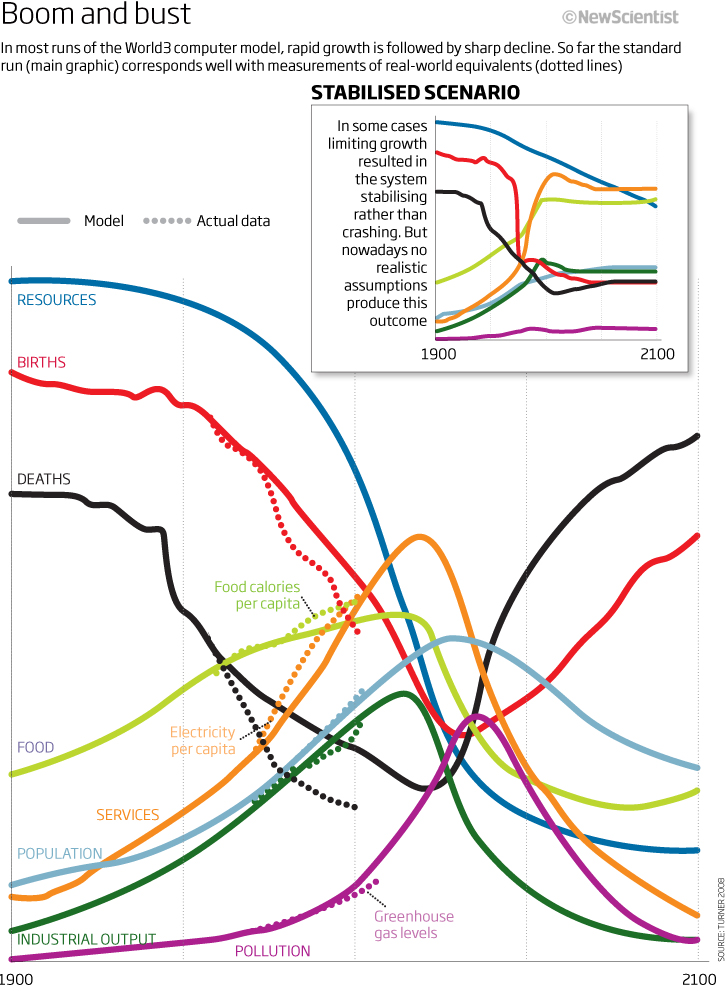
The Return of The Limits of Growth:
https://www.resilience.org/stories/2012-01-10/return-limits-growth/
Old Fucking Punk
boosted



Five years from now: "Whoops, it turns out we trained our AI on existing staff so it finds white men most trustworthy. Sorry everybody, we were told AI was unbiased." https://www.maketecheasier.com/face-scanning-ai-judge-job-applicants/
@mkwadee Of course, one thing that should be factored into this analysis is the reclassification of many other car types as SUV. Hatchbacks, station wagons, etc. are now SUVs. Most common SUVs are minivan chassis and engine without sliding doors.
#ShlaerMellor, #FunctionPointAnalysis, #punk, #environmentalist, #unionAdvocate, #anarchosocialist
"with a big old lie and a flag and a pie and a mom and a bible most folks are just liable to buy any line, any place, any time" - Frank Zappa
Joined May 2019