
Technical Weaving Thread: Practices to Catch/Prevent Mistakes
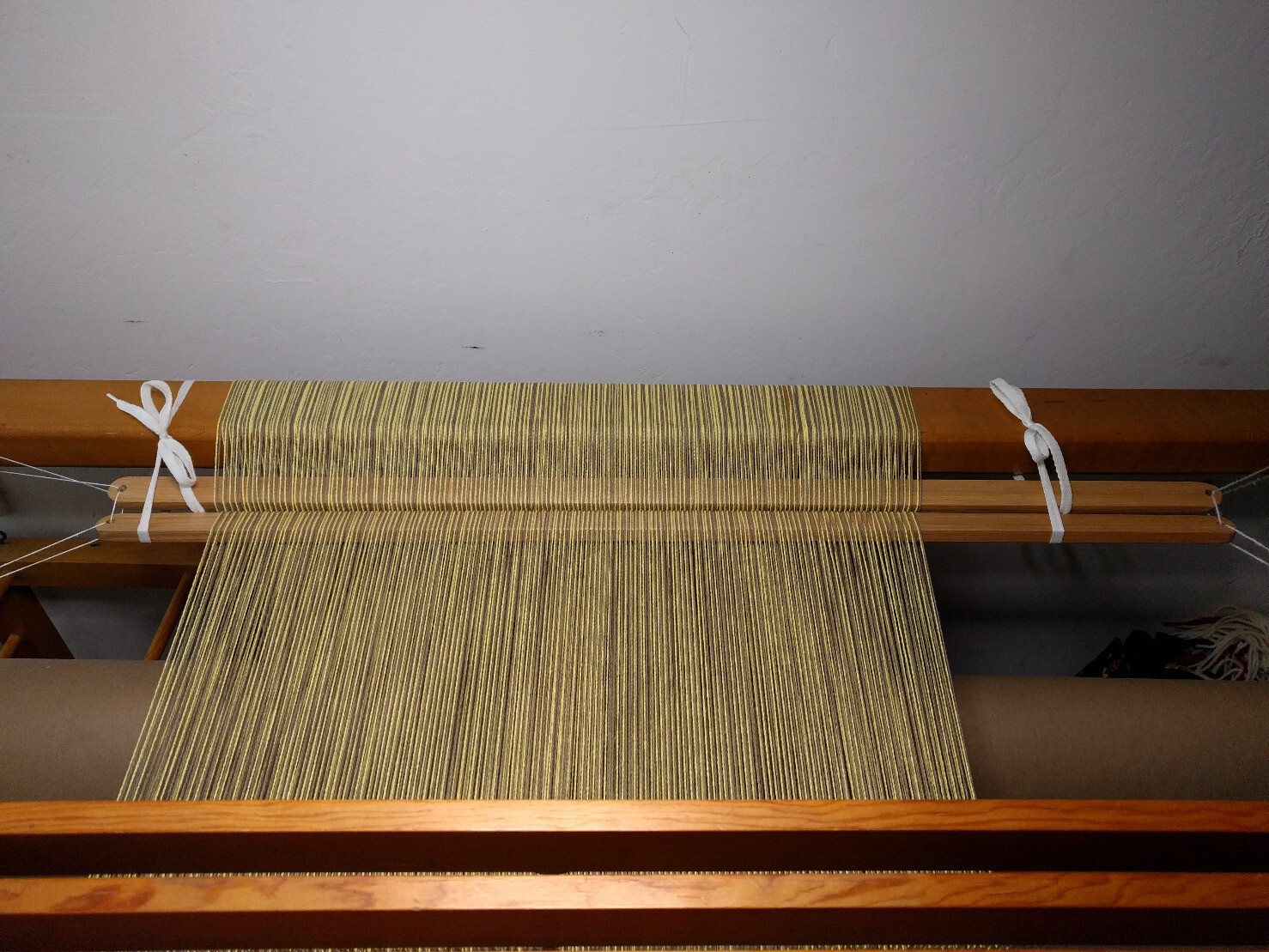
Weaving takes patience and attention to detail, at least if you want fabric that matches your plans. Mistakes are inevitable and you either accept them in the work or possibly spend hours correcting them.
All it takes is a distraction to lose where you were. Ideally you catch mistakes as soon as possible so there's less work to undo/redo. In this thread I'll describe some of my practices that help me catch errors.
Technical Weaving Thread: Practices to Catch/Prevent Mistakes

1. Measuring Warp
When measuring warp I literally say the count over and over as a mantra as I run a thread the length of the warping board.
I always use a counting thread so I don't have to count the full number of warp threads, only smaller values (typically 10 or 12). This also means when I inevitably get distracted and lose count, I only count the warp threads on the outside of the counting thread.
Technical Weaving Thread: Practices to Catch/Prevent Mistakes
2. Maintaining the Cross
Lease sticks maintain your cross while dressing the loom to prevent counting mistakes when threading, but many instructions have you remove them after threading, I (like some Scandinavian weavers) leave them on to the end of the project.
This saved me in this project when I notice threading mistakes after I start to weave, and when a warp thread was missing entirely.
Technical Weaving Thread: Practices to Catch/Prevent Mistakes
3. Unique Heddles
When threading your loom, it's easy to mix up a heddles from different harnesses as you are often only relying on depth perception.
I have a 4 harness loom with metal heddles. When buying more heddles for a rug project, I bought a different style, and then set up odd harnesses with one style and even with the other. This helps me catch threading mistakes as each harness is distinct from its neighbor.
Technical Weaving Thread: Practices to Catch/Prevent Mistakes
4. Staggered Heddles When Threading
I, at most, separate only four heddles at a time from the rest when threading, and I stagger them in the order they are to be threaded so there is visible distance between them.
This not prevents threading mistakes, I can visually see the current 4-thread pattern in order and confirm where I am when threading a long complicated pattern.
Technical Weaving Thread: Practices to Catch/Prevent Mistakes
5. Tying Threaded Groups Together
After threading a "round" number of heddles based on WPI or natural end of a pattern, I tie them with a temporary knot to separate from other groups.
This protects me against losing track of where I am in my threading, as I can always count the number of tied bundles.
This also protects against mistakes when sleying the reed, as I only deal with "round" numbers of threads at a time.
Technical Weaving Thread: Practices to Catch/Prevent Mistakes
6. Use "Walking" Tie-Ups
My center treadles are always tied up for tabby. The rest, whenever the pattern allows, instead of 1-2-3-4, I tie up in a "walking" pattern where I always move from left-side treadles to right side, and back again.
This isn't just better for ergonomics, it helps catch mistakes when you lose track of where you were. If my foot was on a left treadle, I know the next treadle must be on the right.
Technical Weaving Thread: Practices to Catch/Prevent Mistakes
7. Throwing Side Matches Treadling Side
Whenever the pattern allows a walking pattern, I also make a point to throw my shuttle from the *same* side as I'm treadling. That way if I ever lose track of where I am, I can look at the combination of shuttle location and foot position and figure it out.
It also means if I ever depress a treadle on the right side, but the shuttle is on the left, something is wrong.
Technical Weaving Thread: Practices to Catch/Prevent Mistakes
9. Always Stop at a Stopping Point
You can't always predict how long it will be between weaving sessions. The worst is to sit back down, wonder where you were, and guess wrong. I never stop weaving in the middle of a pattern, I always go all the way to the end (whatever that means for a repeating pattern). If I have to get up briefly, I weave at least to the end of a logical block and move my magnet.
Technical Weaving Thread: Practices to Catch/Prevent Mistakes
10. Don't Be Afraid to Talk to Yourself
OK so for the most part I am talking to myself only in my head, or an inaudible whisper, but even when I only am remembering a four-number sequence for treadling or threading I still repeat it like a mantra while I'm doing it. I've caught many mistakes by noticing what I'm saying and doing don't match.
I think a "top 10 list" is a good place to stop. If you made it this far, thanks!
Librem Social is an opt-in public network. Messages are shared under Creative Commons BY-SA 4.0 license terms. Policy.
Stay safe. Please abide by our code of conduct.
(Source code)
Technical Weaving Thread: Practices to Catch/Prevent Mistakes
8. Use Magnets to Track Pattern
The bottom of my beater bar is metal, so I attach my treadling pattern to it with magnets. Instead of marking off where I am, I group blocks (typically 4 picks) and then slide the magnet to the next block when I complete one.
This is faster than pulling out a pencil and makes it easy to visually see where I am and what's next.
#weaving