how the hell did we land in a situation where people can say things like "16GB isn't enough for a daily driver"?! (not criticising people who say that at all, it's not their fault!)
i mean, my systems all have 4GB RAM a piece, and the only time i feel remotely constrained is when a Firefox tab hits the limit of its 31-bit¹ address space and crashes
¹ i run Firefox in a 32-bit subsystem, because otherwise it tries to malloc() 28GB, and eventually will crash Linux by attempting to use it all. damn overcommit!
I usually have 8 or 16GB is my computers because I can. Most of the computers I use are around 6 - 11 years old, but can still be upgraded to 16 or 32GB memory.
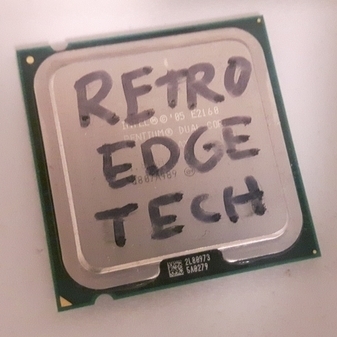
I am getting into more retro hardware, but even then the Core 2 Duo and similar platforms can be often be upgraded to 8GB memory. I have access to a lot of hardware because my business is repairing and refurbishing computers.
One of my projects right now is a Dell Precision T5400 that I plan to upgrade with two LGA771 Xeon processors and 32GB of PC2 ECC memory.
I am interested in what you wrote here:
> ¹ i run Firefox in a 32-bit subsystem, because otherwise it tries to malloc() 28GB, and eventually will crash Linux by attempting to use it all. damn overcommit!
Can you elaborate on that or do you have links to any documentation about running a 32-bit subsystem for some programs?

@millihertz
>disk-consuming
Compared to what some mainstream distros want now — for all the programs to bring their set of libraries with them, it's not that bad at all 😅
@retroedgetech