

societyoutcasts @societyoutcasts@librem.one
Survivalist
Nationalist
Joined Mar 2022
The profitable seduction of addictive personalities has given us a class of addicts far worse than alcoholics. The misery caused by the drug trade has cost billions to industry and has endangered the lives of more noninvolved people than any criminal enterprise in history. (China has no drug problem. Both the pusher and the addict are shot).
Drugs pump about as much money into the criminal justice system as they do into the pockets of the drug dealers. The phoney war on drugs has caused a social nightmare scarcely hinted at by the prohibition of alcohol early in the 20th century. Like during prohibition, yet another and stronger set of criminals has risen.
Not too long ago an on the street interviewer had his crew focus the camera Ona drug deal going on a block away from a group of cops standing on the sidewalk socializing. He called their attention to the crime in progress and one middle-aged officer said frankly that the judge would only let them go and so made no move to do anything. The cop knew which side his bread is buttered on. Like many cops, he knows the drug dealer is, in a sense, his employer. He knows the "war on drugs" is a joke.
The tragedies he and those like him leave in their wakes is a small price to pay for job security, legal fees and high-level careers in the criminal justice system.
Consider the following:
A young man, has been arrested 93 times! Reason dictates that the young monster should have been put to sleep after his third offense proved an established habit pattern of criminality. But consider his profit to the criminal justice system. 93 arrests and who knows how many convictions? If things were to stay the same, he'd represent millions of dollars in his lifetime. He's a gold mine, except to those he robs, rapes, maims, and kills.
Those who allow them their freedom before and after whatever sentence they serve have a vested interest in their freedom to commit crimes.
The cops, prosecutors, the defense attorneys, the judges, the bailiffs, the court reporters, the bail bondsmen and the janitors all profit from crime. If criminals were even forced to serve their entire sentence, thus keeping them out of circulation for years instead of months, employees of the criminal justice system would suffer dramatically. Habitual criminals commit crimes while out on bail and especially while out in parole.
The criminal justice system, from the cop in his patrol car to the US department of Justice, millions of noncriminals make a good living off criminality. When a prison is to be built, at a cost of billions of dollars, the politicians awarding the contracts often get large rake-offs. Those supplying food, clothing, etc., to the prisoners, pay their bills because of those who prey on society. The guards and the wardens live well because society pays well to keep society's predators alive.
But without the habitual criminal to take up most of the police officer's time, most New York cops would be unemployed. Employment has become more important than public safety. And this is not simply bin New York but nationwide.
There are too many police officers who earn a weekly paycheck. These are needed to contend with the hoards of habitual criminals whose only function is to rob, rape, maim and kill.
Nearly all of these criminals have records showing their hatred for their betters. An efficient system would round them up and destroy them all. That would severely cut down the need for police officers to patrol, manage traffic, answer emergency calls and protect and serve as police officers are supposed to do.
Many billions of dollars annually are taken in by our criminal justice system and without an ever-rising crime rate, our economy would suffer.
Does crime pay?
It's true that one who commits a crime has little change of being caught. It's also true that if he's caught there's little chance he'll be convicted. If convicted there's little chance of his doing time. If he does time, there's little chance of his serving his full term.
These are well-known facts which encourage criminality. But what most people fail to realize is that the entire criminal justice system itself is one of the greatest industries in our country.
societyoutcasts
boosted
Pretty sure this is Joe Biden's new plan for the only MEAT you'll be allowed to eat soon:
societyoutcasts
boosted
societyoutcasts
boosted
There isn't nearly enough controversy here.
https://www.brighteon.com/00000000-0000-0000-0005-819796271001
VS.
https://m.youtube.com/watch?v=eaHBB7b1VCU
societyoutcasts
boosted

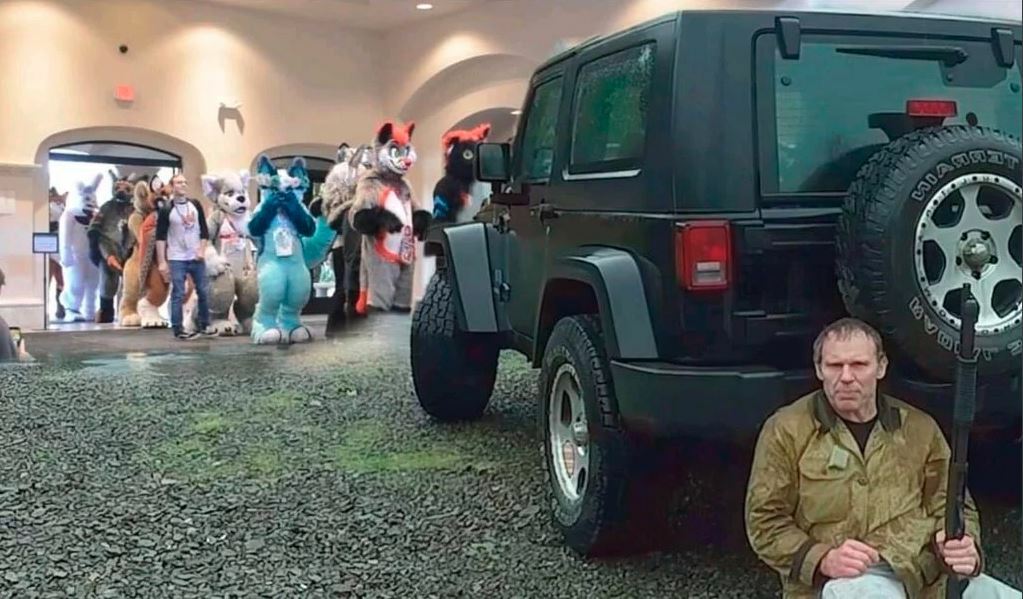
"So I came across an interesting discussion in my last video over whether birdshot when loaded into a 3" shell will possess enough penetrating power to remain lethal after passing through a fursuit. Now as it turns out, I happen to be in a position to test this theory. Let's find out, shall we?"
"Qanon, is obviously a psych-op."
"How do you know?"
"Simple, the Q in it stands for Q from the bond films, thus implying intelligence agencies."
"Wait, isn't there another company named after Q from the bond films?"
societyoutcasts
boosted

My grandfather needed surgery, he was at death's door. He refused the surgery- it was likely to kill him anyway. Since his time is short, he's ignored the diet the doctor's suggested. Eating fatty, greasy food everyday. Not only is he still alive a year later, but he's healthier too. I'm just really glad I still have him.
societyoutcasts
boosted
only ever drink raw breast milk. anything else will make your dick fall off
societyoutcasts
boosted


A person who is demoralized is unable to assess true information. The facts tell him nothing, even if I shower him with information, with authentic proof, with documents and pictures. ...he will refuse to believe it... That's the tragedy of the situation of demoralization


Survivalist
Nationalist
Joined Mar 2022